“If you desire truly to live you will cease trying to find magic tricks and short-cuts to life and learn the simple laws of being, and order your life in conformity with these. Realign your life with the laws of nature—this and this alone constitutes living to live.” ― Herbert M. Shelton, Getting Well
1895-1985
Shelton was born on October 6, 1895, in a farmhouse in Collin County, near Wylie, Texas, to Thomas Mitchell Shelton and Mary Frances Guthrie Shelton, who demonstrated remarkable devotion to their Christian faith. His father shared that Herbert entered the world during a fierce storm. Herbert later reflects that he has faced a “storm” throughout much of his life—an indication of the resilience that would come to define him.
From a young age, Shelton’s fascination with animals was evident, particularly in how their behavior changed when they were ill compared to when they were healthy. He was particularly struck by the instinctual fasting exhibited by farm animals during sickness. This behavior led him to explore the concept of nature cure, a philosophy emphasizing the body’s ability to heal itself. Shelton concluded that fasting serves as a vital mechanism for the body to detoxify and eliminate harmful waste, showcasing the profound wisdom found in nature’s design.
In August of 1911, while in high school in Wylie, Texas, Shelton stumbled upon the transformational writings of natural hygiene. He discovered Bernarr Macfadden’s magazine *Physical Culture* on a newsstand and was captivated by its insights. It was the first time he realized that there was something other than the current allopathic medical system. Inspired, he embraced a healthier lifestyle, resulting in a remarkably muscular physique. Embracing these changes not only improved his physical strength but also set him on a path toward a healthier life. At this phase of his life, Dr. Shelton found that he became increasingly alone as he progressed in his efforts to uncover the Natural Hygiene principles that were buried in the literature of the past. His contemporaries, though not openly hostile to his research and ideas, were not given to approval of his efforts.
This budding genius in Natural Hygiene possessed the qualities that ensured his success. He was able to perceive the origin of the Natural Hygiene Movement and its consequent growth and development, and he had the great insight to grasp its truth and realize its tremendous importance to modern man. With his courage and determination, it was apparent that he would, with his writings, spearhead a renaissance in Natural Hygiene.
Bernarr Macfadden’s Physical Culture magazine was launched in 1899, and expanded into a publishing empire.
After serving in World War I, Shelton reignited his passion for health by enrolling in the International College of Drugless Physicians in Chicago, a school established by Bernarr Macfadden, where he received his Doctor of Physiological Therapeutics degree in 1920. This marked the beginning of his transformative journey toward promoting natural wellness. This college, despite its name, was more like that of Trall in its curriculum and principles than any subsequent college. It was practically Hygienic.
He embarked on post-graduate studies at Lindlahr College of Natural Therapeutics, where he gained invaluable hands-on experience in renowned facilities like Lindlahr and Sahler Sanatoriums. This solid foundation propelled Shelton to further his education at the prestigious American School of Naturopathy (1922) and the American School of Chiropractic, ultimately earning a doctorate from each esteemed institution.
While a student, he taught dietetics, or to state it more succinctly, he untaught the students the untruths that they obtained from other teachers. One who knew him at the time said, “he was forever busy teaching basic principles even if they contradicted what Dr. Benedict Lust, President and Founder of the school, said.”
Next, Shelton returned to Chicago, where he advanced his education with postgraduate studies at the Peerless College of Chiropractic and engaged in apprenticeships across four diverse institutions. The key takeaway from this experience was invaluable: a clear understanding of what NOT to do!
He sharpened his skills through a hands-on internship at Crandall Health School in Pennsylvania, significantly boosting his expertise in natural healing. During this educational journey, he gained valuable insights into the essential differences between Natural Hygiene, Nature Cure, and Naturopathy. This allowed him to understand how each system possesses unique strengths and offers distinct approaches to health and wellness.
In 1928, Shelton founded his famous Dr. Shelton’s Health School in San Antonio, Texas, a landmark until its official closing in 1981. At his Health School, the program flourished over the years. Students and guests engaged deeply through study, enlightening lectures, and practical experience. An early advertisement said it well: Dr. Shelton’s Health School was unique among the institutions, where the sick got well, where the well got better, where we’re all gaining the priceless knowledge needed to stay well. The mission was to foster true health by understanding its root causes and breaking free from traditional medicine’s constraints. His guiding principle was simple yet profound: “Health through healthful living.”
From 1925 to 1928, he served on the staff of Macfadden’s Physical Culture Magazine and, during the same period, wrote a regular health column for the New York Evening Graphic. The “Roaring Twenties”—a time marked by mass inoculations —provided no shortage of compelling material. His writing stood out for its engaging style, striking a rare balance between depth and accessibility. Though his topics were often profound and rooted in foundational health principles, he presented them in a way easily understood by readers without any medical background. His ability to communicate clearly and effectively was the key to his success as a writer—he was widely read because he was widely understood. He was greatly successful as a writer because he was understood. As a boy in his early teens, Dr. Christopher Gian-Cursioremembers reading his article in Physical Culture on the death of Rudolph Valentino.
Shortly after leaving Physical Culture in 1928, he was co-founder and соowner of the “How To Live” magazine. At this time, he published his great work “Human Life, Its Philosophy and Laws.” His great accomplishment was not that he had oriented himself historically, but his accurate evaluation of the work of the pioneers in the Natural Hygiene Movement. The work was clearly the beginning of modern writing on Natural Hygiene. This book, like all of his subsequent writings, clearly indicates that this researcher, after truth, was not interested in self-glorification, for if he were, he would not have given the great thinkers and reformers of yesteryear the prominent place that he did.
The first Health School Dr. Shelton owned and operated. In all, he operated his Health School at seven different locations. From the Herbert M. Shelton – A Remembrance.” Health Science: May-June-1985
Myrtle Matera, who worked alongside Dr. Shelton from 1951 to 1952, witnessed numerous extraordinary recoveries. One case that truly exemplifies the power of natural healing involved a man with gangrene in a severely swollen leg, rendering him unable to walk. He faced the grim prospect of amputation. Instead of succumbing to this fate, he sought help at the school and began an immediate fast. Remarkably, after fasting for 44 days, he walked out on his own two legs. Dr. Shelton provided this life-changing care without expecting payment, as the man was a charity patient. This commitment to treating all patients equally, regardless of their financial situation, underscores the transformative approach Dr. Shelton practiced.
Dr. Vivian Vetrano shared a poignant memory about Dr. Shelton in a special issue highlighting his character. During the challenging times of the Great Depression, Dr. Shelton found himself facing the potential loss of his Health School due to dire financial circumstances. A well-known company approached him with a lucrative offer to sponsor a Herbert Shelton radio program, portraying it as an essential resource for health information while promising a substantial salary. Yet, Dr. Shelton’s keen instincts raised a red flag. As he scrutinized the contract, he uncovered a troubling requirement: he would have to endorse a laxative, which went against his deeply held beliefs. Ultimately, Dr. Shelton chose integrity over profit, demonstrating his unwavering commitment to promoting true health rather than endorsing deceptive products.
“Substances that are injurious to the well are equally (or more so) injurious to the sick.” ― Herbert M. Shelton, Rubies in the Sand
Herbert Shelton (standing rear right) during his army days at Camp Travis between 1917 and 1919 in San Antonio, TX. As a conscientious objector, he was assigned to the kitchen. From the Herbert M. Shelton – A Remembrance.” Health Science: May-June-1985
Shelton faced arrest, jail time, and fines for “practicing medicine” without a license. Over the next thirty years, these arrests persisted at regular intervals. Dr. Vivian Vetrano recalls when Dr. Shelton was lecturing in New York City and taken into jail like a common criminal just for delivering a healthcare lecture. He was ultimately convicted of violating the Medical Practice Act of 1932 and served 30 days in prison on Rikers Island. The striking irony is that Dr. Shelton never engaged in actual “medical practices” and did not prescribe any drugs at all.
From 1934 to 1941, Shelton meticulously crafted a comprehensive seven-volume series known as The Hygienic System. This seminal work remains a vital resource in the 20th-century natural hygiene movement, offering insights that are still relevant and influential today.
In 1942, Shelton faced charges of negligent homicide after providing holistic treatment without holding a valid state medical license and for allegedly allowing a patient to “starve to death.” Despite the gravity of these accusations, the case was never brought to trial, and the charges were ultimately dismissed.
Some of the many books written by Herbert Shelton. The matched leather bindings mark these as a part of his personal collection. From the Herbert M. Shelton – A Remembrance.” Health Science: May-June-1985
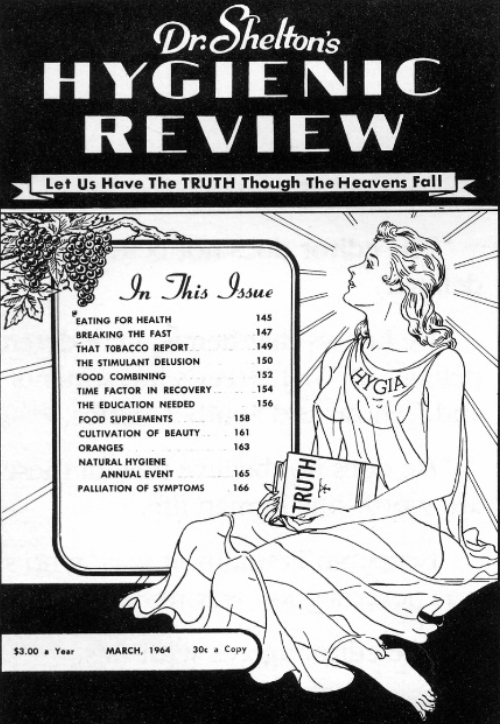
In 1939, Dr. Shelton launched *The Hygienic Review* magazine, quickly establishing it as an essential resource for health enthusiasts and practitioners. Frequently on the cover was Hygeia, the goddess who was the guardian of health in ancient Athens. For an impressive span of 41 years, Dr. Shelton dedicated himself to guiding readers through the vital principles of natural hygiene, exploring the evolution of pathology, and dispelling the myths surrounding health and disease. This influential magazine provided invaluable insights into the laws governing our physiology and offered practical advice on maintaining optimal health. By engaging with *The Hygienic Review*, readers found a path to a more vigorous and vibrant life.
In 1948, Shelton, along with the esteemed doctors William Esser, Christopher Gian-Cursio,Gerald Benesh, and Jesse Mercer Gehman, as well as film producer Jack Dunn Trop, publicistSymon Gould, and attorney Irving Davidson, came together to establish the American Natural Hygiene Society. Shelton was unanimously elected as the first president, driving a powerful movement. Through dedicated educational initiatives, the Society successfully reignited the Hygienic revolution, empowering thousands to embrace and apply the transformative principles of Natural Hygiene. This organization, which became the National Health Association in 1998, continues its mission to promote health and well-being for all.
“You are free to choose your own way of life, but you are not free to choose the results. ” ― Herbert M. Shelton, Getting Well
In 1939, Dr. Shelton launched *The Hygienic Review* magazine. Frequently on the cover was Hygeia, the goddess who was the guardian of health in ancient Athens. From the Herbert M. Shelton – A Remembrance.” Health Science: May-June-1985
In 1978, during a fasting event at Shelton’s schools, a tragic incident unfolded when a patient lost their life. Dr. Shelton was subsequently charged with negligent homicide for providing medical treatment without a state medical license. Shelton faced severe consequences after a protracted two-year legal battle, ultimately leading to bankruptcy. This financial collapse forced the closure of a school that had served and supported countless individuals over many decades. Learn more about the case and verdict from lawyer Mark Huberman in an article titled The Legal Watch in the Health Science MagazineNov/Dec 1982, Jan/Feb 1982, Mar/Apr 1982, May/June 1982, Jan/Feb 1984,Mar/Apr 1984, May/Jun 1984, and Jul/Aug 1984.
Herbert M. Shelton dedicated his entire life to advancing his beliefs, leaving a lasting impact that resonates today. Over his 89 years, he worked tirelessly to share his insights with anyone willing to listen—even those who would not. His teachings gained global recognition, leading to translations of his works into numerous languages, including Swedish, French, Spanish, Greek, Hindi, Hebrew, Turkish, and German. In the 1930s, the esteemed Mahatma Gandhi recognized the value of Shelton’s insights on fasting and nutrition, extending an invitation for him to teach natural living in India. Sadly, the outbreak of World War II thwarted that opportunity, but Shelton’s legacy continues to inspire countless individuals worldwide.
Herbert M. Shelton was an uncompromising individualist who fundamentally transformed the healthcare landscape. He demonstrated remarkable courage, boldly challenging the prejudices of his era and standing firm as a vital voice for change. His journey was marked by extraordinary physical, mental, and moral resilience as he faced harassment and prosecution repeatedly for unwaveringly practicing his principles.
Few advocates for change ever witness the fruits of their labor, but Dr. Herbert Shelton stands out. Through his relentless commitment to transforming healthcare, he has courageously confronted the entrenched system and ignited a reform movement. His exceptional insight into the urgent need for reform in healthcare was matched only by his compelling command of language and his fearless use of it. He adeptly unveiled the system that preys on the vulnerable, profiting from overpriced medications and unnecessary surgeries.
“Surgeons can cut out everything except cause.” ― Herbert M. Shelton
Inspiration drives countless individuals to challenge the established authorities of modern beliefs, daring to ask profound questions and demanding answers rooted in facts. Shelton’s courageous spirit motivated numerous writers, researchers, and scientists to confront age-old medical practices and push for meaningful reforms.
His achievements are well-documented in history, illustrating that a single individual, fueled by determination and encouragement, can drive significant change and reform within their lifetime.
In an interview with Dr. Herbert Shelton in the September/October 1982 issue of Health Science, Mark Huberman asked how Dr. Shelton would like to be remembered. His response was, “As the man who brought order out of chaos and as the man who revived a dying movement.” Indeed, he accomplished both—bringing clarity to a complex field and revitalizing a movement that was on the brink of fading away.
Dr. Shelton, a former boxer in his youth, faced a myriad of health challenges throughout his life, particularly in his later years when he was believed to be battling Parkinson’s disease. This decline was likely the result of years of head trauma and a severe neck injury from boxing, compounded by a devastating blow from a stallion that further intensified his struggles. Yet, despite these formidable obstacles, his extraordinary work ethic compelled him to forgo rest, relentlessly pushing himself to the limits for decades, which, regrettably, exacerbated his health issues.
However, his mind remained remarkably sharp and keen until the very end. He approached his work in hygiene with unwavering passion and infectious positivity, inspiring everyone around him right up to his last days. Towards the end of his days, he teamed up with Jean Oswald to co-author the influential book Fasting for the Health of It—a timeless guide to the benefits of fasting, still available on Amazon today.
Dr. Shelton lived a long, impactful life, defying the odds despite his health challenges. His inevitable death on January 1, 1985, marked the close of an era in the development and consolidation of the hygienic movement, leaving a lasting legacy that continues to inspire.
“There are certain fundamental conditions proper to the mental and physical well-being of man, and we must understand, as a matter of strictest science as well as of individual experience, that health is maintained or lost in exact proportion as these fundamental conditions are supplied or denied. This is one of the first important truths about our physical organizations, which we must learn if we are to have health on anything more than the haphazard basis that is commonly accepted. When, in our manner of living, we violate, whether through ignorance or despite knowledge, certain organic laws, obedience to which alone can preserve health, we must inevitably suffer the necessary consequences of each violation. “Health by healthful living” thus becomes the watchword of Natural Hygiene.”
In Health for Millions, Dr. Shelton writes that the most common daily activities can negate health and longevity, and shows you how to stop suffering from poor health and start living your life. He believed that nutrition is the cardinal function of organic evolution and growth. It is the sum of all processes by which raw materials (foodstuffs) are transformed into living structures and prepared for use by the body. It is the appropriation of nutritive material by the plant or animal and its transformation into cell substance and structural units. He further explains that Health is not a precarious state; it is the normal state of the body, the inevitable product of the normal functioning of its organs and tissues.
“What the sick need is teachers not treaters, health schools not hospitals, instruction not treatment, education in right living not training the sick habit. Both they and their advisors must get rid of the curing idea and the practices built up thereon.” ― Herbert M. Shelton, Getting Well
Life’s Great Law: Every particle of living matter in the organized body is endowed with an instinct of self-preservation, sustained by a force inherent in the organism, usually called vital force or life, the success of whose work is directly proportioned to the amount of the force and inversely to the degree of its activity.
The Law of Action: Whenever action occurs in the living organism as the result of extraneous influences, the action must be ascribed to the living thing, which has the power of action, and not to the dead, whose leading characteristic is inertia.
Law of Power: The power employed, and consequently expended, in any vital or medicinal action is vital power, that is, power from within and not from without.
The Law of Selective Elimination: – All injurious substances which, by any means, gain admittance within the domain of vitality, are counteracted, neutralized, and eliminated in such a manner and through such channels as will produce the least amount of wear and tear to the organism.
The Law of Dual Effect: The secondary effect upon the living organism of any act, habit, indulgence, or agent is the exact opposite and equal to the primary effect.
The Law of Special Economy: Under favorable conditions, the vital organism stores up all excess vital funds above the current expenditure as a reserve fund to be employed in a time of special need.
The Law of Vital Distribution: In proportion to the importance and need of the various organs and tissues of the body, the power of the body, whether much or little, is apportioned out among them.
The Law of Limitation: Whenever and wherever the expenditure of vital power has advanced so far that fatal exhaustion is imminent, a check is put upon the unnecessary expenditure of power, and the organism rebels against the further use of even an accustomed “stimulant.”
The Law of Vital Accommodation: Nature’s Balance Wheel–“The response of the vital organism to external stimuli is instinctive, based upon a self-preservative instinct which adapts itself to whatever influence it cannot destroy or control.
Law of Repose: Rest and sleep permit the renewal of cells, tissue repair, replenishment of nerve centers, and elimination of accumulated toxic waste. We can never get out of an organ what is not in it. What is in it is put there during repose; it is taken out during activity.”
The living organism has an inherent ability to heal itself. Healing is the natural result of the orderly and lawful processes of life. The effectiveness of these healing processes largely depends on two key factors:
1. The elimination of all factors that have damaged or are currently damaging health.
2. A sufficient and proper supply of the essential elements needed for life.
To achieve these two primary goals in caring for the sick, no poisons are necessary, nor can they be of any help. On the contrary, poisons are always harmful and, under any circumstances, can be life-threatening.
Herbert Shelton posed this question in his monumental work Human Life. It’s Philosophy and Laws (1928). The following are excerpts from his answer printed in the special edition of the Herbert M. Shelton – A Remembrance issue of Health Science.
1. Cultivate poison cheer. Do not attempt to see the world through rose-colored glasses, but learn to take joy, sorrow, good fortune, and misfortune with the same calmness and equitableness.
2. Exercise daily. Exercise in the fresh air and sunshine, and as often as possible in the form of play.
3. Secure plenty of rest and sleep each day. Learn to retire early.
4. Keep it clean. This refers to both body and mind.
5. breathe fresh air. Keep your windows open. Get outdoors as much as possible.
6. Secure as much sunshine as possible. Your body should be exposed to the sun’s direct rays in the morning or evening when it is not excessively hot.
7. Eat moderately and wholesome food.
8. Be moderate in wearing clothes. The fewer clothes one wears, the healthier he will be.
9. Have an interest in life. A purpose list is marked for early dissolution.
10. Get married. Build a home. Raise a family.
11. Avoid all poison habits.
12. Avoid all sexual excess.
13. Avoid all excess. Build your life on the conservation of energy, not upon its dissipation. Don’t waste your force on useless and needless expenditures.
14. Do not become one-sided in your manner of living.
Life must be lived as a whole. Don’t get the idea that you’re an exception to the laws of life. There are no exceptions.
― Herbert M. Shelton, Human Life. It’s Philosophy and Laws (1928).
Natural hygiene is properly defined as “that branch of biology which designate the conditions upon which health depends, the means by which it may be sustained in all its virtue and purity, while we have it, and the means upon which it’s restoration rests when we have lost it. It is the science application of the principles of nature in the preservation and restoration of health.
The paper lies pure and white before me. The pen is poised in my hand. The words should come easily in a steady torrent, and flow majestically into a broad river of exposition, translucent as crystal, a vast shimmering mirror, where the reader may see outlined clear and sharp the image of this man as I see him. . .. Herbert M. Shelton.
There is so much to say, so much to evaluate; for we are in the presence of true greatness.
How do you judge a man? And THIS is a man! Doctor, writer, historian, teacher, leader, organizer, fighter, compiler – to list only a few of his achievements. Where do you begin? I find myself standing in awe before what he has accomplished.
Posterity will remember Herbert M. Shelton for many things. Still, I believe that above all, in his significant contributions to the betterment of life on earth, he will live on in the annals of our progeny for his symbiotic relationship to the whole of Natural Hygiene. In the thousands of articles that he has written, in all of his books, in his innumerable lectures, Herbert M. Shelton has never stood alone. He has always rested foursquare and solidly upon the massive collection of the works and writings of the forebearers of Natural Hygiene.
His greatness lies in his always making his readers, patients, students, and listeners consciously aware that it is not “I” who am laying down the “Basic Principles of Natural Hygiene,” as a personal discovery. Still, it is “we,” Shelton, and all those who have gone before him …. who strive mightily to give the “Truth Though the Heavens Fall.” His greatness lies in that he is not merely a compiler, an interpreter. History will place upon the scales of evaluation on the one side the work of Graham, Trall,Jennings, Nichols, Alcott,Oswald, Walter,Page, Dewey, Shew, and the other hygienic pioneers. And on the other side of the scales, it will place the works of Herbert M. Shelton, and lo and behold, weighty and powerful as were the combined efforts of all his predecessors, Shelton’s side will outweigh all of the others combined. For his greatness lies in his infinite capacity to bring out not only the essence and meaning of the work of those who labored before him, but the added impact of his own thinking and conclusions, based on broad knowledge and experience, and the advantages of living in our “enlightened” twentieth century.
Were it not for Herbert M. Shelton, there would be no modern resurgence of Natural Hygiene. Beginning in 1920, he started alone … one man…. to probe into the past, and he singlehandedly exhumed the vast storehouse of knowledge of Natural Hygiene, which lay mouldering and neglected and unread, amongst many forgotten tomes, gathering dust in libraries through the ages. Little by little, others have joined Shelton. It was to him that I wrote a letter about fifteen years ago suggesting the rebirth of a Natural Hygiene Society, and it was Shelton who spearheaded the organization and supported it.
Upon the passing of Dr. Shelton, a special issue of the magazine was dedicated to his life and work. From the Herbert M. Shelton – A Remembrance.” Health Science: May-June-1985
Symbiosis is a partnership. Internal symbiosis is the reciprocal differentiation and cooperation seen in the evolution of organs and the physiological division of labor in organisms. Concord and mutual aid are essential between the organs of the body.
The body is a sociophysiological organism in which the good of the whole community of life takes precedence over that of the individual organ and in which the vital spare products of the work of each organ contribute to the integrity and function of all the other organs. It is not the expedient profit of one organ but the well-being of the whole organism, which is the aim of all physiological activity.
Just as in society, anti-social behavior and anti-social principles tend to pervert the whole social, economic, and moral life of society, so in the body, the correlations of organo-socially bad conduct tend to weaken and pervert the whole of organic life, the resulting evils extending to the mind, emotions, and instincts.”
Life offers us treasures that are more to be desired than the trivialities upon which so many lives are now wasted. These more desirable treasures may be ours only if we are willing to plan and work for a more abundant life rather than, as now, planlessly groping in the
waste places of life.
The Natural Hygienic life offers us much more than the older ways of life ever dreamed of. We see natural hygiene as a complex series of restraints and denials.
We must get our thinking past natural hygiene’s restrictions; we must lift it to a plane where it will challenge us to realize that there is such a thing as an abundant life—a life that causes us to accept the restrictions gladly and willingly, not because they are restrictions, but because they are part of how the higher and more abundant life is achieved.
Sacrifices are no longer sacrifices when they help us to achieve a worthy goal.
-Dr. Shelton’s Hygienic Review (Vol. XIII, No. 7, March 1952)
On Living…
Shall I grow or decay? This is a question that every reader may well ask himself. Shall I go forward in mental, physical, moral, and social development or slip backward? Since I cannot stand still, which way should I go? The choice is mine; what choice should I make?
Natural Hygiene offers you an opportunity to grow better as you grow older, to fulfill the requirements and aims of human life. It offers you the opportunity to be useful in a great cause and aid in assisting others to achieve a fuller life.
Dr. Shelton’s Hygienic Review (Vol. XII, No. 4, December 1950)
We are more successful with our cabbage. Flowers and dogs because we care for these more intelligently. As soon as we learn to care for our children as intelligently as the gardener cares for his roses, they will surpass his finest roses in loveliness and health.
We can have a nation of healthy, happy, well-developed, lovely children when we become sufficiently interested in them to place their interests first and commercial interests last.
The NHA wishes to remind the readers that nothing in this or other publications is intended to constitute medical treatment or advice. Readers should further be aware that in several areas, previous publications do not reflect the NHA’s current teachings or health approaches.
Our Mission
The mission of the National Health Association is to educate and empower individuals to understand that health results from healthy living. We recognize the integration of all aspects of health: personal, environmental, and social.
We communicate the benefits of a plant-based diet, exercise and rest, a healthy environment, psychological well-being, and fasting when indicated.
The Joys of Getting Well
This excerpt from his book The Joys of Getting Well 1957 epitomizes Dr. Shelton’s approach to health care and was published in the Spring, 1985 issueof the Vegetarian Health Science Issue. This article announced the passing of Dr. Shelton on Jan.1, 1985.
The forces and processes of life perform in a perfectly lawful and orderly manner;
The processes of reproduction.
The work, growth, and development.
The repair and replenishment of wear and tear.
The recuperation of the energy of an exhausted body.
The excretion of waste.
The repair of damage to the organism resulting from an accident or violence.
The healing and restoration of the sick body.
All of this adds up to the fact that healing is accomplished by the lawful and orderly operations of the same forces and processes that brought the organism into existence, caused it to grow and develop, excrete its regular waste, heal its wounds, and knit broken bones. This is the only healing power known to man. There is no force in nature. Hence, none is known to scientists capable of maintaining us in life or restoring us to health, except the force or forces resident in the living organism and known to us as life or vitality.
The “fatal blunder” of all the schools of so-called healing is their effort to substitute their violent methods for the healing power resident in the living organism. They have substituted their cures for life processes and tried to usurp the organism’s prerogative of self-healing. Their methods and systems have been innumerable; the passing of both the systems and the methods attests to their failure. There is no logic like the logic of events to demonstrate the folly of the substitutes for nature’s way of doing things. There is no more healing power in a Turkish bath, an electrical current, a massage, or some other agency of this type than in a drug. A mud bath possesses no more healing power than penicillin. It has the negative virtue of being less harmful, and this is all that may be said in its favor.
The ways or processes by which the sick recover when they do recover, no matter the name given to the disease or the treatment employed, are strictly biological processes and are not susceptible to imitation or duplication by any school of so-called healing practitioners. The forces and processes of the living organism alone restore health, and these processes and operations are always in obedience to the same general principles of life; the power and the process by which the organism is developed and maintained are the same by which wounds are healed and health restored in disease.
Timeless Teachings – Posions
Herbert M. Shelton wrote extensively on the subject of poisons. These two excerpts from What is a Poison? which appeared in the September 1948 issue of The Hygienic Review and the chapter by the same name in Shelton’s book “Natural Hygiene: Man’s Pristine Way of Life” (1968), explore the common fallacy that poisons can be healthful in small doses and shed some light on the false notion that everything is all right in “moderation.” From the Vegetarian Health Science Magazine, Spring of 1984.
Pharmacologists are fond of talking of therapeutic or medicinal doses of drugs, but of these same drugs, they also speak of toxic being an overdose. Photo credit: Envato
It is essential that we make the distinction between those things that are harmful only by degree or quantity and those substances that, in their very nature, are inimical to the body. Injury may result from taking too much food or too much water, even from taking too much oxygen. Still, there is a radical difference between these substances in their relations to the living body and drugs. Pharmacologists are fond of talking of therapeutic or medicinal doses of drugs, but of these same drugs, they also speak of toxic being an overdose. These distinctions preserve the fallacy that “the distinction between medicines and poisons is merely one of degree, not of kind,” that a poison is not essentially so, but only quantitatively so.
If the reader consults a standard work of pharmacology, he will find listed under the various drugs their so-called physiologic and therapeutic effects. Then, if he consults a standard work on toxicology, he will find listed under the various drugs their toxic effects. Upon comparing the two groups of effects, he will be amazed to find that they are the same. The therapeutic effects of the drug and toxic effects of the drug are identical, except in degree.
The “therapeutic effects” of the drug are the actions of the body in resisting and expelling it. The toxic effects of the same drug are the same actions of the body in resisting and expelling it. When, for example, vomiting is listed as one of the “therapeutic actions” of a drug, it is the same vomiting that is listed as one of the “toxic actions” of the same drug. In both instances, the vomiting is the action of the body in resisting and expelling the drug. The same fact is true of catharsis, diuresis, and diaphoresis.
Whatever the living organism cannot use as food, it must be rejected as poison. This is a law of all organic existence. Nobody mistakes the actions of the body in digesting an apple, for example, for the actions of the apple on the stomach. Why, then, do we continue to mistake the organism’s actions in expelling a drug by vomiting for the action of the drug on the stomach?
For more than 200 years, people have sought to prove that alcohol is both poison and foort, or either, according to the circumstance. Of this substance, it has been said: “Alcohol is like every other chemical, whether it be a poison like strychnine or a food element like protein is, there is an amount below which it is not a poison, and above which, it is a poison. Too much table salt is a poison; a little is not.” It is a fallacy that poisons are such by quantity and not by quality.
As vital structure can be evolved only out of food, air, water and sunshine, we can distinguish between good and poison without reference to popular opinions. Every substance on
Earth has a definite relation to the living organism; either it may be used with which to build, and maintain the organism and carry on its functions, or it may not. If it is usable, it is food; if it is not usable, it is, so far as its relation to the organism is concerned, poison.
If a substance cannot be appropriate to the development of living tissue and employed and healthy action, it can harm the structures of the body. Every substance that has no place in the normal metabolic processes of the body wastes the body’s energy in resisting and expelling it, thus inevitably inducing disability and premature death. In other words, poisons are those substances that the living organism cannot use but must resist and expel. The presence of such substances in the body can serve only as disturbing elements. They are foreign bodies and must be expelled, often at great expense to the organism.
Metabolism is defined as tissue change, the sum of all the physical and chemical processes by which living organized substance is produced and maintained, and also the transformation by which energy is made available for use by the organism. Metabolism is the sum of the biological processes upon which the processes of growth and repair of the cells and tissues depend. The process of metabolism comprises three activities: the preliminary stage of taking food substances, the transformation of these materials into cell substances, and the elimination of the cell products resulting from cellular activities, which are not to be retained in the cell as part of its protoplasm.
Substances that are not adapted to the normal processes of metabolism, whether introduced into the body from the outside or generated within the organism itself, are not usable by the body and are invariably proven to be harmful.
It is not enough to understand the normal relations of various substances to living organisms as a whole, for many organisms can metabolize substances that other organisms cannot use. Soil is food for plants, but it is useless to animals. The tobacco leaf is food for certain forms of insect life; it is a virulent poison to man. Belladonna is a poison to man, but it is food for the rabbit. We need, most of all, to understand what has a normal relation to Man.
It is appropriate to judge things in their relation to life by their effects. A substance is beneficial or injurious in its relation to the living organism in exact ratio to the beneficial or injurious effects it produces. All things must be measured by the same standard and accepted or condemned under the same rule.
“How to Eat” first appeared in Herbert Shelton’s classic Superior Nutrition (Dr. Shelton’s Health School, 1951). In it, he describes a simple common sense approach to eating that should reinforce the understanding that we are not what we eat but what we digest and build into structure and function. From the Health Science Magazine – Jul/Aug 1985
Gastronomy is the art of dining well when the table is set to one’s liking. Gastrosophy is more than this. It is the harmonious interlocking of production, preparation, and consumption of food. Gastrosophy is the grand Field where the laborers and the arts of the garden and kitchen, the Orchard, vineyards, and conservatory, all meet and mingle, and where the luxury of appreciation has been earned by the laborers, which have proceeded it.
The discrimination of specific adaptations of different food stuffs to certain organisms and constitutions belongs also to that sphere of science which we term Gastrosophy. The first step in establishing a valid Gastrosophy is the determination of the man’s normal or constitutional dietetic character.
Hunger is the organic or assimilative passion in which the wants of the body are reflected in the form of distinct mouth and throat sensations, often by means of a distinct desire for particular food. True hunger is rarely indiscriminate. It is not a blind impulse to eat, but a definite desire to eat certain foods. Real hunger is earned by the labors, which have proceeded it and is not prompted by the clock. Appetite, a counterfeit hunger, is commonly finicky, indiscriminate, unearned, and periodic. It relates to it rather than to need.
The first rule of eating should be: wait upon hunger. One should eat when hungry, and only when hungry. Then, he should eat sufficiently to satisfy the demands of hunger. Nothing is to be gained by eating beyond the normal demands of the body for food. Eating should be an exquisite pleasure, but pleasure should not be the end and aim of eating.
If you follow the practice of eating when hungry and only when hungry, there’ll be no regular meal times and there will be no eating between meals. If your work is such that you must set aside certain periods of the day for eating and eat these times, without reference to hunger, then you should, by all means, abstain from eating between meals. Likewise, you should not eat in the evening before retiring. This does not mean that it is not well to go to bed on a full stomach. It simply means that you have had your regular meals, there is no need for an added meal after the theater or after the card game or the social chat. Eating as a social function should also be avoided. All of these types of eating not only lead to overeating, but they interfere with the digestion of the regular meals.
The second rule of correct eating should be: eat all the food required to satisfy hunger, and then cease. Overeating carries its own penalties. In civilized life, we make a merit of gorging everything set for us, and it is even considered a grave misdemeanor in children to be picky about their food. Mothers and fathers, physicians, and nurses are supposed to know what best to prepare for them. What business have they with instincts! Why should they have references; how dare they attempt to choose? Does not the adult know what is proper for them and when they should eat? Does he not even know how much they should eat? True, it may be that the adult does not know how to feed himself, but he certainly knows all there is to know about the feeding of children!
Although for thousands of years, overnutrition and its results have puzzled the authorities, it is known definitely that whole food taken in two great quantities becomes a dissipation, both innervating and poisoning to the eater. In conditions of surfeit, the parts of the organism lack the stimulus for work, both physiological and biological. Surfeit. and rich fare stimulates in pathological directions. For example, there seems to be a hereditary transmission of arthritic tendency which arises out of habitual surfeit.
The body is duly nourished only when the proper food that has been eaten is also properly digested. If the function of digestion is impaired so that the food eaten is inadequately digested, then no food, however nutritious and well-fitted to meet the needs of the organism, will afford healthy sustenance to the body. When eating, for example, digestion becomes impaired, so that food ceases to be nutritious, the more the individual eats, the more he is poisoned, rather than nourished, by his food. The lack of nourishment results from a lack of power to digest as often as from a lack of food.
Properly speaking, a meal consists of two elements: spiritual and material food. Since a cheerful tone of mind and joy are associations that enable us not only to enjoy our foods more but to digest them better, friendship, myrth, wit, good stories, love, and absence of distractions, irritations, bitterness, etc., compose the spiritual essence of a good meal. If the eater is not entirely at ease, if there are family quarrels at the dining table, if there is a viciousness of the head of the family as to the eating of the other members, if gloom and depression hang like a dark pall over the table, the food will not be enjoyed nor will it be efficiently digested.
The best time and place to tell funny stories is at the dining table at mealtime. It is far better for everyone around the table to tell a funny joke or story at the table and get everyone to laugh than to come to the table grouchy and make everyone tense and nervous. Laughter promotes relaxation and ease. At the table, let peace and enjoy range supreme. That should be the rule of life.
Fatigue, pain, fear, grief, anxiety, depression, tension, anger, self-pity, inflammation, fever, and similar emotional and physical states, cause the foundations of digestive juices to dry up and the normal movements of the digestive tract to slow down or to be altogether suspended. When one eats in one of these states, one invites indigestion and its consequent discomfort and poisoning.
Our rules should be:
If not comfortable from one meal to the next, miss the meal.
If there is pain, fever, inflammation, miss the meal. Miss as many meals as required for these to pass.
If under emotional strain, if angry, grieved, depressed, worried, anxious, miss one or more meals until emotional poise has been regained.
If fatigued, rest a bit before eating there’s nothing like a period of rest and relaxation to restore functional vigor to the tired man.
Man is equipped with a chewing apparatus. Chewing food breaks it up into fine particles so that the digestive juices may get to it. Chewing ensures thorough insalvation of food. It also assures that the food shall be tasted, and this is important in the adaptation of the digestive juices to the character of the food. Chewing and tasting food enables us to really enjoy our food. Swallowing food without tasting means we do not derive pleasure from eating. If food is well chewed and not bolted, we enjoy it more and digest it better so that we are better nourished. Thorough chewing of food will also enable us to tell when we’ve had enough. Our rule should be to chew your food; your stomach has no teeth.
Water, according to the principles of natural hygiene, is the only true drink. All other liquids that are taken as drinks are either foods (milk, fruit, juices, etc.) or poisons (coffee, tea, cocoa, alcohol, alcoholic, liquor, etc.) and should be taken as foods or abstained from as poisoned.
Thirst is the indication that water is required. This has reference to genuine thirst and not to a fictitious thirst that is caused by salt, condiments, etc. Our rule should be: drink when thirsty and only one thirsty. But we should not drink with meals, nor soon thereafter.
All the water desired should be taken in 10 to 20 minutes before meals.
All the water desired may be taken 30 minutes after a fruit meal.
All the water desired may be taken two hours after a starch meal.
All the water desired may be taken four hours after a protein meal.
Readers desiring to learn the facts and principles underlying the following rules for food combining should study My Food Combining Made Easy. The rules are:
Eat acids and starches at separate meals.
Eat protein foods and carbohydrate food foods at separate meals.
Eat, but one concentrated protein food at a meal.
Eat proteins and acids at separate meals.
Eat fats and proteins at separate meals.
Eat sugars and proteins at separate meals.
Eat melons alone.
Take milk alone, or let it alone.
Desserts are tidbits, or confections, that are eaten after one has eaten more than enough. They combine with nothing and our best admitted from the bill of fare.
Timeless Teaching: Pathology Is a Process—Not an Event
Life may be complicated in detail, but its principles are easily understandable. Plants and animals appear perfectly capable of reproducing themselves and embodying their offspring with all they need to know to enjoy healthy, happy lives—none of these lower species have a PhD in biology. None are licensed nutritionists or midwives. People are equally capable of understanding their part in the great symphony of life and enjoying the good life – living in harmony with nature.
There’s a great deal of misunderstanding about the nature, purpose, and causes of disease. Medical practitioners and the general public they have influenced ignore that, whether or not it appears only to affect one organ or function, disease is always both systematic and the result of a lengthy process.
The following excerpted passages are from the writings of Herbert M Shelton, PhD, present a more comprehensive view of the disease process that conserves as a standard by which other explanations can be measured.
The principles of continuity and unity, which underline all of modern science, which permeates all of its literature, have never found acceptance in the field of medicine, particularly in the field of pathology, its causation, and development.
Whether they (medical practitioners and researchers) view the pathology at autopsy or in advanced stages while the patient is still alive, it is all the same – they view and point to the progressive deterioration of the body this the disease, all the while ignoring proceeding stages of the pathological process.
Pathology does not overtake nor attack anybody. It is a development and is always preceded by a more or less lengthy preparation period, during which hygienic errors are repeated, and their effects accumulate, even if counterbalanced by strong resistance.
Trouble with one organ is not a local problem but a systemic condition.
As life advances from infancy to middle age, the sphere of life widens, and the individual comes in contact with an increasing number and variety of pathogenic influences, one tissue after another and one organ after another breaking down before the onslaught of impairing influences. A Greek label is attached, and the individual has a new disease or a complication of the old one. Not only are our names given to local expressions, but new names are attached to them as they undergo development changes.
The popular notions that a person may be healthy one day and sick the next, or that a person is in good health and suddenly dies, are based upon the assumption that the disease comes into being full-blown.
There is in variable order in the evolution of pathology. When their sequence and relationship are adequately understood, it will be seen that the unbroken line of pathological evolution reaches from its initial beginnings in infancy to the final ending in later life.
All pathology is caused. They are brought on by continuous and wanton wasting of energy reserves that result first in innovation and, afterward, toxemia.
We are asked: why must innovation proceed with toxemia? The answer is that, so long as nerve energy. (functioning power) is adequate, excretion will keep the fluids and tissue sweet and clean, and no toxemia can develop. Adequate functioning power is a sure guarantee of purity of blood. If elimination is not checked, toxemia will not evolve. This aligns with our previous statement that in every pathological development, one part is before and another is after. The sequence is invariable. This is not to say that extraneous poisoning, such as drug poisoning, cannot occur in the absence of enervation, but this is not what is meant by toxemia, nor is such poisoning the cause of the diseases with which mankind suffers.
From the Archives – Doing Something – Overcoming the Remedy Mentality
Thomas L Nichols, MD, made a place for himself among the pioneers in the hygienic movement. He was a medical student at Dartmouth whenReverend Dr. Sylvester Graham went to Boston to lecture in the 1830s. That was more than 100 years ago. Nichols attended Graham’s lectures and became convinced that medicine was all wrong. He gave up his medical studies and became editor of the New York Evening, Harold.
In New York in the 1840s, he met Mary Gove, a remarkable woman who had been the first woman to prepare herself to lecture on hygiene, or, as it was commonly known at that time, Grahamism. Mrs. Gove was attracted by the water cure and went to New York to acquaint herself with its principles. After some time spent in the water cure establishment of Dr. Joel Shew, she opened a water cure of her own in New York City.
In those days, no woman was permitted to attend medical college, and there were no other schools of healing to attend. Nichols decided that since Mrs. Gove could not get a license to practice, he would complete his studies of medicine, secure a license, and share it with her, thus protecting her in her work. Their marriage came in due course, as did his degree in medicine and his license.
Nichols studied medicine at the University of New York under the famous Dr. Valentine Mott. He would often laugh to himself over the thought of the revolutionary purposes to which he was going to put the reactionary knowledge they dispensed at this place. Nichols graduated near the head of his class.
In the spring of 1850, Dr. Thomas and Mary Gove Nichols moved to 87 W. 22nd St. with their establishment, where they did flourishing work for a number of years before they went to England, where they spent the remainder of their days. When asked what the difference is between their water cure and that of Dr. Joel Shrew, Mary Gove Nichols would reply: ” To us, water cure is love cure.”
The remarkable couple were the first psychoanalysts. It is doubtful that they ever employed the term, using instead the term esoteric anthropology. Still, they employed its technique and formulated a sound theory as a basis for their psychoanalytic work. Two of our contemporary historians say that the term employed by the Nichols is “a more accurate descriptive title than the later and more generally used term psych analyst.” Furthermore, they knew that their methods came straight from Mesmer, a knowledge lacking in the Freudians of today.
Dr. Nichols shares that “the first thing we must learn – the first principle of medicine, and the one most often disregarded is to do no mischief. It is not true that we must do something. It is always safer and better to do nothing unless we know what to do. If we are unsure that we can aid nature, we must not risk hindering her with our interference. All experience shows that, in a great majority of cases, she affects a cure without assistance and even in spite of mischievous efforts. “
“To do nothing, “he says, “is better than to do mischief. “He quotes the following statement, made by Napoleon to the Italian physician Autonomarchi; “Believe me, we had better leave off all these remedies. Life is a fortress, which neither you nor I know anything about. Why throw obstacles in the way of its defense? It’s own means our superior to all the apparatus of your laboratories. All your filthy mixtures are good for nothing. Medicine is a collection of uncertain prescriptions, the results of which, taken collectively, are more fatal than useful to mankind. Water, air, and cleanliness are the chief articles in my pharmacopeia “
“If medicine were only as wise as surgery! “Exclaimed Dr. Nichols. “When a man has a broken bone, the surgeon is content to put it in place, prescribe rest and a moderate diet, and leave nature to mend it. But when it is the liver or lungs that are disordered, the doctor bleeds and blisters, and doses and gives alternative, cathartic opiates and does more mischief in a week than nature can remedy in a year. “
Although, as he so truly said, “all experience shows that in a great majority of cases, she “nature “affects a cure without assistance, and despite mischievous efforts, “what is (what was) the practice of the sick, their families, nurses, and physicians? Let Dr. Nichols tell us. He says:
“But the moment anyone is taking ill – that is, the moment nature begins the operation of expelling some matter of disease – everybody wants to do something to the patient. Every old woman rushes in with her infallible nostrum, and nature, who has honestly set to work to cure a disease, finds herself hindered on every side. When the stomach is incapable of digestion, it must be deluged with gruel, rice water, and barley water as if the moment one is sick, he is in imminent danger of starvation. Then comes the doctor, and if one of the common sort, the attack begins in earnest. A few years ago out came the lancet, and followed its rude gas a cord of blood. Poor nature, feeling the work she had to do, and needing all her strength, gasped at this murder is sacrifice; but the next attack was to cover 50 in.² of skin with a torturing blister and at the same time to pour down the throat doses of the most virulent poisons of the materia medica. This went on, and when nature finally sunk under the disease and the added enthusiasm of a vile torturing medication, everybody consoled himself with the idea that “everything was done that could be done”; it should be added “to kill the patient. “
The practice of so-called medicine has undergone some change, due mainly to the pressure from the outside, since Dr. Nichols wrote, but it can hardly be said to have improved much. It no longer bleeds at the victim to death. Instead of blood lighting being the universal cure, blood transfusions rapidly become the Panacea. Powerful poisons are still in use, while surgery has grown into a greater menace to the sick than medicine.
“I have no patience with the folly of patients, “says Dr. Nichols, “or the ignorance, to call it no worse, of physicians. But when I see how the ladder are educated, and the former deceived, I cannot wonder at the result. I have seen hundreds of medical students; I’ve attended the lectures of two medical colleges. “I speak what I know, and I testify what I’ve seen. “What Napoleon said is true of the highest and the most enlightened. What, then, must be the truth respecting the great mass of medical practitioners? “
The frantic, almost hysterical doing something that goes on so industriously at the bedside of the sick is the cause of thousands of deaths yearly. Have you not seen the rings of hands and heard the hysterical cry: “Why doesn’t somebody do something? “Anything, just so something is being done. The physicians of the world meet this demand in thousands of destructive ways.
Quote to do nothing is better than to do mischief, “says Nichols, but it is not so well as to do something that should be done. When a man has fallen into a ditch, we better do nothing than jump upon him and bury him deeper; but it is much better to carefully pull him out, cleanse him of the mud, put him on the right path, and send him on his way rejoicing. “
“We can do all that is practical to remove the cause of the disease,” he explains. But removing the cause is not enough. Physicians and treaters insist on doing something – something curative. The patient and members of his family all insist that doing something should be done. Do something! This is the universal cry. And they are never satisfied until they have been done to death.
From the Archives: Rest vs. Stimulation Understanding the Difference Will Transform Your Life.
For years I have spoken out against the employment of all methods of artificial stimulation (irritation or excitation) of the body of the sick person, because such methods tend to exhaust the energies of the patient.
‘One of my critics says of this: “The loss of ‘vital power’ which seems to be a bogey man of Dr. Shelton is not so bad as he paints it. The body is not a static but a dynamic machine constantly generating and losing ‘vital power’ or energy.” We may grant the truth of his statement that the body is a dynamic machine constantly generating and losing energy, without being compelled to grant his contention that it is helpful to waste, by stimulation, the energy of the body as it is generated.
The power of the body to generate energy is limited. The power of the sick body to generate energy is crip pled. The sick person, and especially the chronically sick person, is suffering from nervous fatigue as the result of a previous waste of energy. He is not helped by any measure that further depletes his energy stores.
Stimulation is a forced [drain] upon the energies of the body. It compels the expenditure of energy, not in doing useful work, but in resisting the stimulant. If it is long continued or oft repeated, exhaustion is the result. The depletion of the body’s energies is commensurate with the amount of stimulation it is subjected to.
The opposite practice, that of conserving the patient’s energies through rest, is a far more rational and an infinitely more successful practice. A worker returns home in the evening very tired from a hard day’s toil. We do not prescribe a stimulant for him but rest and sleep.
But when a sick man comes to us with a tired organism after weeks, months, or even years of overwork, stimulation, dissipation, etc., we pursue the opposite course. We tell him that he needs more stimulation, that his organs need to be made to work more. We begin a course of treatment that consists of stimulating the skin, the kidneys, the colon, the nervous system, etc. Sometimes, if he is not too badly depleted when he comes to us, we succeed in whipping up a short-lived simulation of health. Very often, indeed it is the rule, we see our patient grow positively worse from the first.
Danger of Stimulation
The very fact that a period of depression (a reaction), commensurate with the prior period of stimulation, follows every period of stimulation should reveal to us the true wasteful character of stimulation. If we grant that anything is gained during the period of stimulation, we must see that this is lost in the reaction. The more we seem to gain, the more we actually lose.
The stimulation afforded by any stimulant grows progressively less and the subsequent depression progressively greater as the use of the stimulant is continued. Stronger and more frequent doses or a new and different stimulant must be resorted to, and the period of recuperation must be longer.
Another serious objection to the stimulating practice is that it deals with effects only and tampers with the functions of the body and ignores the causes of the troubles present. It seeks to restore health by forcing increased action in the body, rather than by correcting or removing the causes of the disease.
Suppose we assume that we are dealing with a highly toxic patient and it is desirable to eliminate the accumulated toxins from his body, and that we set out to do it by stimulating the organs of elimination, but ignore the cause of the toxic state. We would be in the same position as that of the man who attempts to dip a fountain dry without cutting off the water supply. He dips and dips until he is exhausted, only to find that there is as much water in the fountain as when he started. Indeed, if there were no other outlet for the water, the longer he dipped, the more tired he became, the faster would the water accumulate, four, as his fatigue increased, his dipping would fall off, and the water would gain on him increasingly. In just the same way, we whip up the organs of elimination to greater and greater effort and keep up the process until these organs and, perhaps, the whole organism are exhausted, only to find that the body is as toxic as ever. Indeed, due to the impairment of function that inevitably results from these stimulating measures, the body becomes increasingly more and more toxic.
The Importance of Rest
There is no more effective method of increasing elimination than that of rest. Increased activity increases the production of waste; decreased activi ty lessens the production of toxins. Increased activity expends energy>’; rest and sleep conserve energy. The more an organ is stimulated, the less able it becomes to perform its functions. Give it sufficient rest for recuperation, replenishment and repair, and its vigor and functional efficiency are increased.
Much energy is consumed in physical activity. If rest is substituted for activity, the energy commonly spent in physical activity is available for use in doing other and, for the moment at least, more important work. Nature does not cut off the appetite, prostrate the patient and cut down mental activities, sexual activities and sensory activities, in typhoid, for instance, for nothing. These are all conservative measures—designed to conserve the energy commonly expended in these forms of activity, in order that it may be available for use in the, at present, more important work of recovery.
Rest is Vitogenic
Activity consumes the substances of the body, is vitolytic; increased activity increases the consumption of body substances. During rest, the cells, the tissues, and the organs are repaired, replenished, and renewed. Rest is vitogenic. Resting organs are better able to repair their damaged structures than stimulated organs. Rest and sleep are the great representative restorative processes.
The actual storing up of the energy reserves or the energy sources of the body takes place during rest. Activity expends, rest recuperates, the body’s supplies. The stimulation (irritation and excitement) of an already depleted body only hastens the exhaustion of the few remaining energy stores and brings on the final collapse sooner than it would’ve occurred otherwise. The more the body is stimulated, the sooner it reaches the state of complete collapse. The weaker the body is, the less able it is to withstand the “action” of stimulants—the greater is the necessity of “doing nothing” intelligently.
Only those who have had sufficient experience with both the stimulating (wasting) practice and the resting (conserving) practice to enable them to judge the merits of the two practices are in a position to pass judgment upon them. Anyone who has not completely abandoned the stimulat ing practice and employed only the conserving practice on hundreds of patients and over a period of years, and who, in the face of this lack of ex perimental knowledge of the practice, proclaims the superiority of the stim ulating practice over the conserving one, is in the same position as were the armchair philosophers of the preBaconian period—he simply does not know, and cannot know, what he is talking about; he is only spinning, spider-like, a fantastic theory out of the web of his own fancies.
The NHA wishes to remind the readers that nothing in this or other publications is intended to constitute medical treatment or advice. Readers should be aware that some previous publications do not reflect the NHA’s current health teachings or approach to health in several areas.
Our Mission
The mission of the National Health Association is to educate and empower individuals to understand that health results from healthy living. We recognize the integration of all aspects of health: personal, environmental, and social.
We communicate the benefits of a plant-based diet, exercise and rest, a healthy environment, psychological well-being, and when indicated, the use of fasting.
Welcome to the new home of the National Health Association!
If you are an existing member, you will need to reset your password in order to log in and take advantage of all the great benefits being a member provides—which now includes the ability to update your own contact information (address, phone number, email, upload a picture and much more). Please start by clicking the Register/Log In button and follow the instructions on that page. Once your password is reset, you will use your email address as your username. You no longer have or need a Member Number. Please contact us if you have questions—and thanks for your support!
SUBSCRIBE TODAY AND NEVER MISS AN UPDATE
Subscribe to receive our free eNewsletter and other communications from the NHA!







 SUBSCRIBE TODAY AND NEVER MISS AN UPDATE


