
(1811 -1895)
About

Photo: Engraved by J.C. Buttre, Public domain, via Wikimedia Commons
Quote
I can never forget the occasion of my conversion to the truths I now advocate. Did you ever experience the vast solitariness into which the infinite casts a soul, when to it is given to know some truth? Never before known to it nor to anyone else; and it is challenged to care for such truth, to give it place in its best chambers, to nurture it and cause it to grow.
–Dr. J. C. Jackson
From the Natural Hygiene News – Feb/Mar 1964
James C. was born to James and Ann Jackson on March 28, 1811, in Manlius, New York. James’s earliest memory was watching his father, who became an allopathic physician, ride off to the War of 1812, serving as physician and post-surgeon at Sacket Harbor.
James was a diligent student from a young age and completed his education at the Polytechnic Institute in Troy, New York.
Jackson battled persistent health issues as a youth. His father believed that medicines had curative qualities. He thought that the human body was powerless to heal and needed the intervention of doctors and their medications. James C. became his father’s case study. Sick as his son was, his father continued medical interventions with toxic treatments, which were completely ineffective.
During his youth, Jackson began to use tobacco, which severely impacted his health, resulting in a diagnosis of heart disease. Specialists advised that he should be taken out of school and kept quiet. His father continuously administered medications. Despite these ongoing toxic treatments, Jackson somehow managed to survive to adulthood.
James was a supporter of temperance and frequently spoke on the topic. He was also an anti-slavery abolitionist and became a prominent speaker for the cause through the New York Anti-Slavery Society. In 1840, Jackson edited the National Anti-Slavery Standard until he bought the abolitionist newspaper, the Albany Patriot, and wrote for the paper until 1847.
At 19, he married Lucretia Edgerton Brewster, a lineal descendant of William Brewster, a Mayflower colonist. He worked on a farm during this time, but his health continued to decline. As a result, he discontinued farming and instead began studying medicine to better understand his health.
During a medical crisis in the fall of 1846, he became so seriously afflicted that he had to discontinue all activity. His efforts to recover his health proved futile, and he was pronounced “incurable” by many doctors. His continued illness catalyzed him to continue his search to achieve health, and he eventually became aware of the basic principles of hygiene. He sought treatment from Dr. Silas Gleason at his institution (water cure) in Cuba, N.Y. His health improvement was so dramatic that, as a result, he spent the rest of his life as an advocate for hydropathy. He trained to become a physician and eventually partnered with Dr. Gleason. Together, they opened a water cure at Glen Haven, NY. Some years later, Jackson left Glen Haven and opened his own clinic.
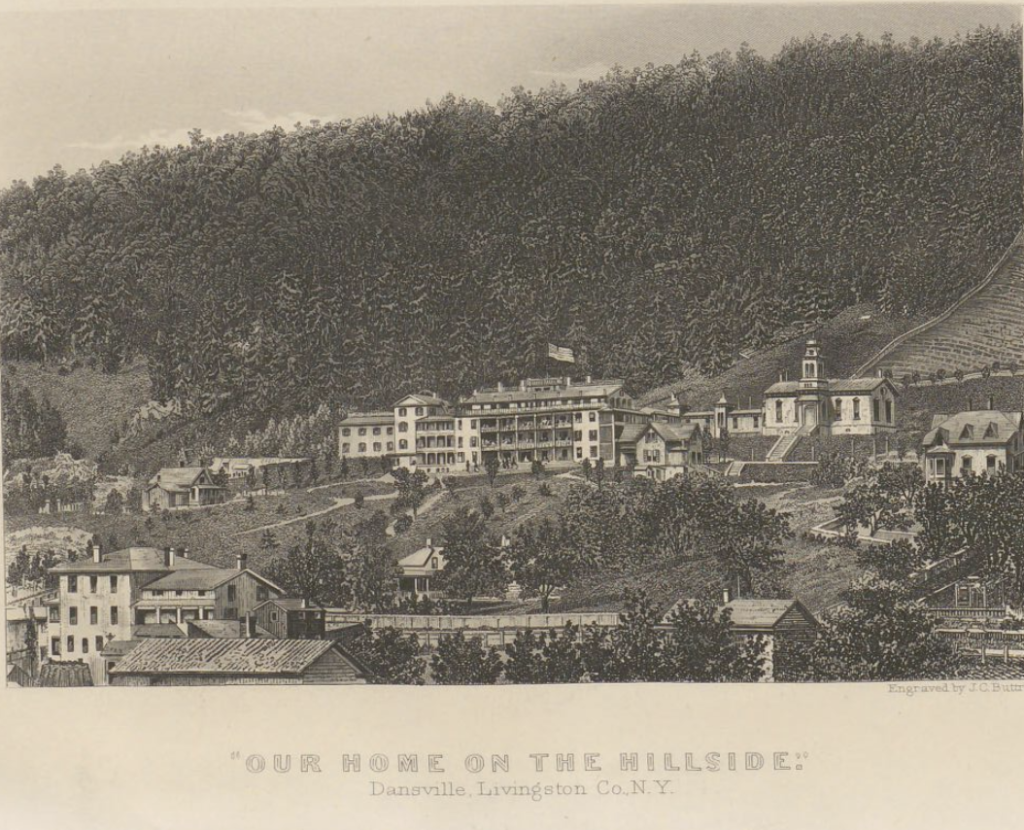
His spa provided patients with clean air, sunbathing, pure spring water, and menus that included simple foods such as vegetables, fruits, and whole grains.
From The Jackson Sanatorium
A reformer in every way, social, political, and religious, he realized that the basis for all personal and social change was the improvement of the human organism. He believed that humans should be able to live free of illness and that those who were sick need not die. Many of his friends and supporters could not believe that sick people could heal without medicine.
His first patient was a woman who had been physically infirmed for years. Her various treatments had included the use of many toxic medications. Her healing took time, but eventually, her health was restored. Word of her medical transformation spread like wildfire. People traveled long distances to see her at the clinic to verify her healing.
Before long, people with every form of chronic disease that did not involve surgical intervention came to the clinic for treatment. There, they remained while receiving Dr. Jackson’s protocols. Numerous recoveries were documented. Onlookers and patients thought it strange that the body could heal without significant intervention. But in reality, Jackson provided time for the body to heal and gave it what it needed: simple food, clean air & water, sunshine, solid sleep, exercise, and hydropathy treatments as needed.
James’ son, Giles, followed in his father’s footsteps and entered medical college. While in school, he was exposed to typhus fever and came home to recuperate. Gile’s fever raged for a short time, but he recovered much faster as compared with similar cases where the patients were drugged and medicated. Four of his college group did not survive the fever.

Photo courtesy of Dr. Christopher Gian-Cursio.
From: V1-N12-Health-Science-march-1979
Needing a larger facility, in 1858, Jackson purchased a former spa founded by Nathaniel Bingham and renamed it “Our Home on the Hillside.” The institute was situated on a beautiful wooded hillside overlooking a picturesque valley. “Our Home” was for people seeking to restore health. His spa provided patients with clean air, sunbathing, pure spring water, and menus that included simple foods such as vegetables, fruits, and whole grains. Treatment included mineral baths along with lectures on various health topics. Jackson worked with his wife and their adopted daughter, Dr. Harriet Newell Austin. Harriet was among the first women in the world to receive the degree of Doctor of Medicine.
Seven years after he opened the Institute, a typhoid epidemic broke out in town. Jackson treated 18 cases of typhus, and not one of his patients died. However, many of the townspeople who were treated allopathically died after receiving the current medical treatments of the day.
Along the way, Jackson’s focus began to include a Christian influence. He believed in Jesus Christ as a life force that could heal the body. Since the Institute opened, he thought that the sick who arrived as unbelievers were healed by their journey of faith and love for Jesus Christ. He wrote the book Christ as a Physician, sharing what he witnessed and discussing the theological exploration of Christ’s role as a healer. He wrote that many diseases that afflict our people are avoidable and might be prevented by Christians if they lived closer to Christ.
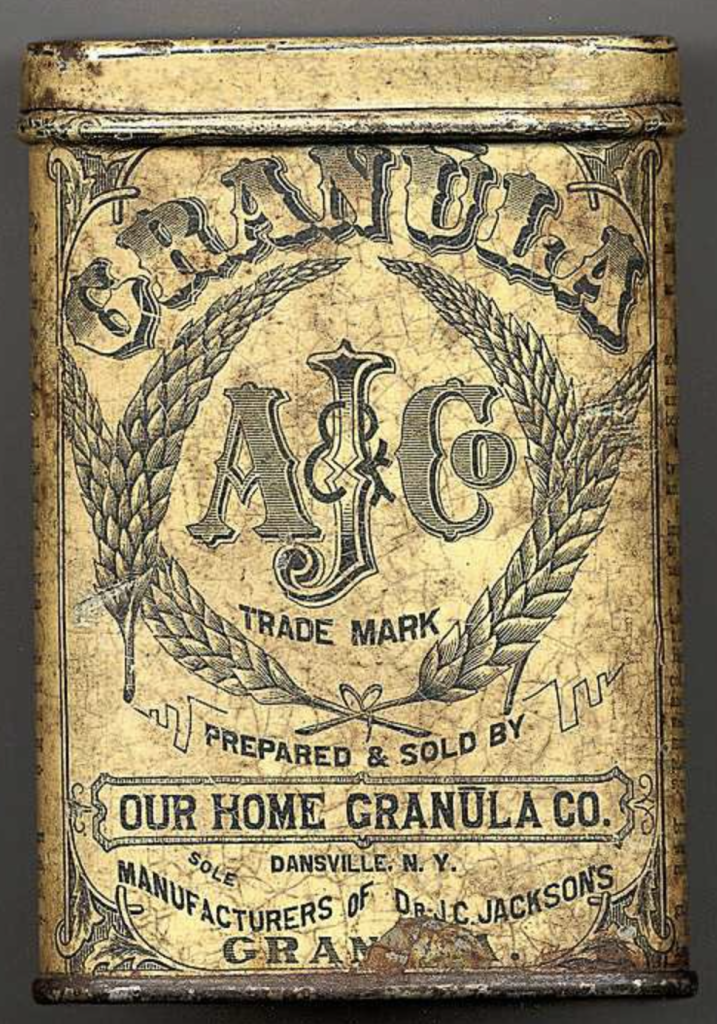
Photo Credit: https://cereal.fandom.com/wiki/Granula
In 1863,Jackson invented the first breakfast cereal food based on Sylvester Graham’s principles to promote a simple diet and named it Granula. Jackson believed that the digestive system was the basis of most illnesses. He began experimenting with using cereal as a treatment. Like Grape Nuts in texture, Granula was much larger and more challenging to chew. It was made of bran-rich graham flour formed into chunks. Chewing was so tough that the cereal had to be soaked overnight to be consumed.
As a physician, lecturer, and editor of his health journal, “The Laws of Life,” he eloquently preached the gospel of health. He opposed the use of drugs, promoted positive life habits, and taught the laws of health to promote wellness and vitality. He placed great value upon mental and moral influences in strengthening the will and banishing doubt and despair. The focus was placed on a healthy lifestyle of eating, drinking, physical exercise, reformed clothing, and observing all physiological laws.
He said, “If man will obey the laws of his being, he may live free from sickness and the fear of premature death and attain a physical strength and beauty. But there can be no law without penalty; pain, sickness, sorrow, deformity, infirmity, and death directly result from violating physical law.” He states that to live free from sickness, man needs only to obey the natural laws of life on which his health depends.
Dr. Jackson called his work psycho-hygiene. It has a few things in common with psychosomatic medicine; it is so all-embracing that it has a distinct and different approach to health problems. To Dr. Jackson, understanding the laws of life meant growth and development after the recovery of health. The laws of health are essential for the maintenance of normal function.
Despite the indescribable suffering in his youth, Jackson lived to a ripe old age. Once he achieved good health, he only ate 1-2 simple meals daily. No salt, butter, spices, or meat were consumed and only drank mineral water. For over 33 years, he did not utilize any medications. Because of this lifestyle, he could read without glasses, had good overall health, and walked upright until he passed away in 1895. He fully believed in the body’s power to restore and preserve its health and saw it happen throughout his lifetime. Jackson’s ideas are being heralded today in other forms as modern medical discoveries.

Quote
“Put away your evil habits, one after another, because they are evil…
…not simply because they hurt you.”
JAMES C. JACKSON, M.D. –
From the Journal of Natural Hygiene – Winter 1957
Life in the 1800s
Jackson was a pioneer and well ahead of his time. The 1800s witnessed repeated outbreaks of typhus and cholera. The leading causes of death for adults during this period were malaria and tuberculosis, while children commonly died from measles, mumps, and whooping cough. The general death rate was high, but for infants and children, it was excessively high. Many mothers died in childbirth or from childbirth fever.
Grains, pork, bread, and lard pies were central to people’s diets—vegetables and fruits were neglected. Many thought that fruits and vegetables were the cause of cholera.
Bathing and fresh air were feared. Houses were unventilated and foul-smelling. Sunlight was not permitted to enter lest it fade carpets or tapestries. Sanitation was neglected; tobacco was used almost universally, and disease was rampant.
The medical “art” in America during this period seems incomprehensible today. Physicians frequently bled patients to “force” disease “out,” and many died in the process. Blistering was also a widespread healing technique used. For at least a century, strychnine, a potent poison, was used as a treatment for paralytic conditions. Quinine was used for fever, with such side effects as severe bleeding, kidney damage, irregular heartbeat, and severe allergic reactions. Water was routinely withheld from the sick, heightening the chances of dying from dehydration. More often than not, the ‘cures’ were worse than the disease.
Teachings

Along with water cures, Jackson believed diet was fundamental to improving health. He did not serve meat, tea, coffee, or alcohol, and the use of tobacco was prohibited. He promoted a vegetarian diet emphasizing fruits, vegetables, and unprocessed grains.
James’s holistic approach to health underscored the significance of consuming unprocessed foods and adhering to a simple diet while avoiding stimulants. He advocated for the healing power of a balanced diet abundant in fruits, vegetables, and whole grains. That formula would help the sick regain and maintain their health. Through his groundbreaking treatments, he healed such distinguished figures as Clara Barton, the founder of the American Red Cross, and Ellen G. White, founder of the Seventh-day Adventist Church, who incorporated some of his teachings in the Seventh-Day Adventist Church’s tenets.
Jackson firmly believed that unhealthy living habits and toxic medications were the causes of illness. The universal practice of using medications that were harmful to the body was found to hasten death. People believed in the curative efficiency of these drugs. Ironically, remedies that would kill a strong, healthy man were used in an attempt to heal the sick. That statement may seem incredible, but nevertheless, it was true.
Dr. James Jackson was a true pioneer, and many of his tenets formed the foundation of the Natural Hygiene Movement, which evolved into the National Health Association.

From the Journal of Natural Hygiene, September 1954
PRECEPTS ON CHILD CARE
“The practice which has grown up in this country of having children born of mothers who have no power to nurse them is exceedingly damaging in many respects. Where the whole transaction begins, is continued, and is terminated in false relations to the life of the mother, it is more likely than otherwise that she will be incapable of nursing her child because she will have such feeble conditions of the .secretory organs as not to be able to furnish milk. Her infant needs to have enough of the food that nature designs so that it may have proper development, and this is its mother’s milk.
There is an outrage committed on a child when the mother is incompetent to nurse it.” “If a woman is to have plenty of milk, let her live hygienically. By eating proper food and using proper drinks, she can be made to give plenty of milk.”
“I have as yet been unable to find in either sex, boy or girl, man or woman, who has given way to crime, who was not either a glutton or a drunkard. I have always found this to be the case. So confident have I been that existing facts warrant my position that I have repeatedly challenged audiences of men and women, or individual men and women, to find me a person who had so far swerved from what is accepted amongst us as right rules of morality whereby to govern one’s conduct in life, as to be open to the charge of criminality, who drank no intoxicating liquors, used neither tea nor coffee, ate no flesh meats, and took no poisonous drugs nor medicines. Until now, I have never been brought face to face with such a person, nor have I had unquestionable testimony that such a person existed.”
JAMES C. JACKSON, M.D.
From the Journal of Natural Hygiene – Summer 1957
Notable Achievements
If a history of human endeavor were to be written that encompasses all of the tremendous constructive deeds performed by men as they traveled through life, a prominent place would have to be given to Dr. James Caleb Jackson. Few today are aware of the value of the work of this incredible health and medical reformer.
Early in his life, he developed into a fighter for truth and freedom. He lectured extensively for the New York Anti-Slavery Society and became a prominent speaker. For ten years, he had positions of eminence in social reform and was a powerful force as editor and proprietor of the Albany Patriot newspaper.
James’ health was challenged from an early age. It didn’t help that his father, who was trained in the allopathic medical practices of the day, continued to use these techniques on his son, which usually made him worse. Despite this care, he was able to mature to adulthood but continued to have a sickly constitution until he received treatment.
James recovered after taking a water cure at Silas Gleason’s Greenwood Spring Water Spa in New York. After his recovery, he worked there until he opened the hydropathic institute at Glen Haven, New York, in 1847.
Jackson quickly outgrew these facilities. In 1858, he bought a former spa founded by Nathaniel Bingham in Dansville, New York, and began Our Home Hygienic Institute. It became the largest hygienic institute in the world, caring for over 20,000 patients, utilizing the psycho-hygienic philosophy of treating the sick, and proving, again and again, the fallacy of giving toxic medicines to invalids. Clara Barton, the most famous recipient of this treatment, often claimed that Dr. Jackson’s practices saved her life and allowed her to continue her mission, becoming a nursing pioneer and founder of the American Red Cross.

How to Treat the Sick Without Medicine.
The institute was renamed ‘Our Home on the Hillside,’ where Jackson worked with his wife and their adopted daughter, Dr. Harriet Newell Austin, one of the first women to receive a medical degree. The family eventually called it the Jackson Sanatorium, also known as the Jackson Health Resort.
The founding and development of this institution was the pinnacle of Dr. Jackson’s career. He shared his treatments and observed the results of his years of practice in the Journal of Laws of Life. The journal treated all subjects relating to Life and Health and shared his experiences operating the largest Hygienic Institution in America. He advocated and wrote about improving people’s lifestyles throughout his life. He educated his patients on how to live, making health the foundation for growth and development through all the stages of life.
He was a prolific writer, as noted in the publication section. One of his significant publications was Hints on the Reproductive Organs: Their Diseases, Causes, and Cure on Hydropathic Principles. In this book, Jackson begins with the doctor’s role. He reviews qualifications, issues of medicine, and medicinal abuses. He specifically discusses men and women and their diseases, treatment, and the five principal causes of disease. Jackson believes that man’s vices negatively impact not only one’s health, but on family relationships as well.
He also wrote on various subjects along with treatments utilizing his principles. Summaries of each book he wrote can be found under the publication section.
- Consumption: How to Prevent It, and How to Cure It.
- The Sexual Organism and Its Healthful Management.
- Dancing: Its Evils and Its Benefits.
- The Philosophy of Drunkenness and its Cure.
- Tobacco and Its Effect upon the Health and Character of Those Who Use It.
- How to Nurse the Sick.
- The Gluttony Plague, or How Persons Kill Themselves by Eating.
- Piles and Their Treatment.
- American Womanhood: Its Peculiarities and Necessities.
- How to Treat the Sick Without Medicine.
- The Training of Children.
- Christ as a Physician.
- The Debilities of Our Boys and the Early Decay of Our Young Men
- “The Curse” lifted, or Maternity Made Easy.
- The Jackson Sanatorium.
Nutrition formed a significant part of his beliefs, and he invented a breakfast food named Granula based on Sylvester Graham’s principles. It was made of bran-rich graham flour and made into chunks. Granula was similar to Grape Nuts but with much larger rock-hard pieces, which had to be soaked overnight to be consumed.
On his 70th birthday, he gave a speech celebrating the health and length of his life due to the principles he learned. He started with his youth and continual illness at the hands of his allopathic medical doctor father. He next shared his learning path, which led to the Water Cure. He also shared his journey to Christianity and discussed the role of prayer and belief. This speech was bound into a publication titled The Sanitarium.
James C. Jackson turned his “Home on the Hillside” into one of the most successful and famous medical institutions and served as its chief physician. His medical wisdom, comprised of numerous lectures and publications, was published in the journal “Laws of Life. Jackson preached the gospel of health and opposed the use of drugs. He lectured on his Laws of Life and believed one could remove the cause of sickness by conforming to those tenets.
He was highly aware of true health and so compassionately motivated that his words and actions at the bedside of the sick were uplifting and filled them with hope and joy. He influenced tens of thousands through his lectures. His words, crystal clear and rhythmic with life, were a verbal symphony. Fifty years after his death, those who heard him still spoke reverently, inspired by his words, as though they had just been heard.
Jackson had a long and fascinating life, with stints as a farmer, abolitionist, doctor, and founder of a medical spa. He was also an early proponent of what we now call “clean eating” and treated famous patients, including Clara Barton (the founder of the American Red Cross) and Ellen White (the founder of the Seventh-day Adventist Church).
His life’s work became a sacred cause focused on health reform. Strict dietary rules, exercise, reformed dress, and sleep formed his guidelines. He promoted a simple lifestyle, including fresh air and drinking mineral water. Jackson’s term “psycho hygiene” aptly encompasses all the ideas he successfully founded in his practice.

A RARE PIECE IN the Natural Hygiene literature is a letter Dr. James C. Jackson wrote in 1877 to Dr. Holbrook, who was born in the Genesee Valley in Western New York, where Dr. James C. Jackson labored for Natural Hygiene. He had a great influence upon his life, especially at an early age, Dr. Jackson’s writings and the story of his struggles for humanity. I believe nothing he wrote conveys more vividly the mental and moral impress that his writings can produce.
Dansville, N.Y. 1887
Dear Dr. Holbrook:
I am now sixty-six years old. Until I was thirty-six, my habits of life were such as were common to the people of my day and station.I knew nothing of the laws of life and health; I ate, drank, dressed, worked, played, rested, slept, and did as was the fashion of my day. Early in life I became ill, owing, as I now think, very much to errors in diet; but I did not then know nor did my father, who was an oldschool physician of high standing, know, that my ill health arose from dietetic errors. He contended against it from the side of administrative medicine, but I grew worse; and before I came to puberty it was said by the best physicians of that time that I had organic disease of the heart, and could not live long.
I do not know how many diseases the two hundred physicians I have had employed for me, or employed for myself, declared I had, each one of which tried his best by medicines to cure me. During the last twenty years of this period of life, I have no recollection of ever having passed a day without taking some medicine prescribed for me by some physician. The autumn before I came to be thirty-six years of age, I was taken sick away from home, and was in the hands of a physician al winter, who had the good sense not to give me any medi cine, saying, it was of no use to me, because, in his judgment, I could never get well. I lingered in great suffering until spring, when, bolstered up with pillows, I was carried from my friend’s house to my own, never expecting to leave it again; when, incidentally, I heard of what was then called The Water Cure Treatment. I knew nothing about it, had no faith in it; but such stories were told of it as to interest me and interest my family and friends to investigate it; the result of which research was, that I went to a Hydropathic establishment for treatment.
The physician of the Institution was a graduate of an Allopathic medical college, believed in giving medicine to his patients, knew little or nothing more than any other physician of his day about the laws of life and health, and paid little attention to diet while I was under his care. As all of my other physicians had done before, he pronounced me incurable, and preferred that I should not remain, but consented to my earnest appeals, and so I spent the summer with him.
While I lay one night upon my bed tossing with pain, an impression came to me that there was one thing which I had not tried from which I might receive benefit. The impression was that I should change my manner of life, and it took hold of me with such force that I felt im pelled to state it to my doctor, which I did; and while he thought nothing could come of it, he was willing I should make the experiment. So I began a revolution in my habits of living. I made a tabulated statement of my habits as far as I could call them up in order; and when I had gone through the whole list, I examined them carefully to see if my experience in the past as an invalid could furnish me any light upon the subject of the effect of such habits upon my health. I was com pelled to recognize the fact that quite a large proportion of them might just as well be dispensed with as not; and so where I thought I could make changes without injury, I crossed them out from my list, and cut down the whole one-half at one sitting. After I had done this I was surprised to see to what extent I had invaded those indulgences which were connected with my food and drink; or if not directly, were sym pathetically related. This led me to a very serious thought, wherein I was forced to argue the question of food and its uses in its relation to health and disease from what was to me an original standpoint. The consequence was, that during that season, I came to the conclusion that if I could live, it must be through a very radical change in foods and drinks; that I, at least, needed food which was nutritious, but nonstimulating rather than its opposite. To know, therefore, what food to use and what to avoid, I had but to recollect how certain articles liad always affected me. If I ate bread and milk, I felt no immediate in crease of strength; but if I ate largely of beef steak or roast beef, within ten minutes I felt very much strengthened. If I drank cold water, it did not seem to add to my available nervous vigor; but if I drank strong tea or coffee it did. If I ate food so concocted that there were in it no spices nor common salt, it affected me immediately much less in the development of nervous force than if I ate the same kinds of food exactly having plenty of spice or of salt in them. So I ran through the whole list of foods to which I had been accustomed, and in which I had liberally indulged, and drew a line of separation between those which furnished at length a certain amount of nutrition and so of strength, and those which seem to furnish an immediate increment of strength. The latter I discarded, the former I adopted and used. I knew I was assuming a serious responsibility in doing this, but I felt at liberty to do it, because my doctors had all given me up to die; and when a man has sentence passed upon him and is awaiting execution, he needs not consider very seriously in what light public opinion regards his actions.
Under the changes which I made I suffered physically; I lost flesh, and grew feeble in physical strength; nevertheless I had my compensa tions in a very great mitigation of some of my bodily maladies, and I took on better mental and emotional conditions. I slept better, could look out upon men and things through the loophole of my retreat with a more patient, philosophic, and less despairing eye. I found that my affection for my family and my interest in the general welfare of my fellow-men were increasing, and I said, as Nature does really her best in all her ministrations unto men to render equivalents, how do I know that in depriving myself of the accustomed stimulations in my food and drink, and so suffering loss in weight and strength thereby, I am not to more than make it good to gain on nervous energy? There came to me an idea then which I have never lost sight of, that many diseases which put on a nervous type originate in abrasion of the nerve tissue and consequent depreciation of nervous power. So I argued that pos sibly the incapacity of my stomach to digest food, of my bowels properly to defecate their contents, of my heart to beat rhythmically and sym metrically, of my brain to furnish my mental faculties with force to act profitably, might be owing to my having used such food and drinks as had not made my nerve tissue good as against the waste to which, under my conditions of living, it had been subjected. If this was so, then I needed not to die, but only needed time to build, and so I followed out my thought and discarded all flesh meats, all stimulating drinks, all stimulo-narcotic beverages, all condiments of every kind (unless sugar be considered a condiment), and lived for twenty-three years on grains, fruits and vegetables, simply cooked, without any deviation. I ate no flesh of animals; I used no milk, nor butter, nor salt, nor spices; and nearly every disease which had cursed me through life, spoiling my child hood, embittering my young manhood, and ruining me for anything like earnest endeavor in my maturer years, passed away, and I came to be free from all ailments except two, both of which were organic—one a disease of the heart and the other a disease of the kidneys.
About this time an incident occurred which somewhat changed my habits of diet for a whole year. I was paralyzed by an accident, and my kidneys refused to perform their duty. I had an accident insurance policy which entitled me to a stipend while I was incompetent to attend to business. The physician of the company, upon report of ray incapacity being made to him, visited me. He found me in a very dangerous state. There had not been as much secretion of urine in the fortnight between the time of my accident and his visiting me as an ordinarily healthy man would make at one flow. It was understood that unless the kidneys could be made to act I must die.
Knowing, as he did, my utter disinclination to take medicine, he said to me: “Having been so long without any stimulating food, it might be that were you to eat plentifully of meat for a while, the kidneys would be so affected as to resume their functions.” I replied: “I have no scruples against eating meat, except on the ground that its use in my early life, I am satisfied, did me a great deal of harm. If you think it will be well for me to try it, I will.” He said he thought it would, and so I tried it. The effect of a meal of mutton was wonderful. In less than three hours after I had eaten it I passed more than three pints of urine. I then went on eating it for three or four days, when all at once, my kidneys refused to act under its use. I went back to my old diet for a month, eating very sparingly and very simple of grains and fruits, and then tried meat again. It produced the same effect upon me for a few days, with the same relapse. I tried it in this way for nearly a year, and then discontinued its use altogether.
Just about this time I had a severe attack of dyspepsia. I attributed it largely to the disturbance caused in my sympathetic nervous system and brain by my very moderate use of meat. My family was desirous that I should go to Europe for my health. I was full of business, with large responsibilities on my hands, and I declined to entertain the idea. I went to bed one night, and in the morning I arose, told my wife I had been to Europe and got home again. She laughed and wanted to know what I meant. I said: “I have become convinced that I eat too frequently.” I had then been eating, for twenty-three years or more, only twice a day. I said: “Now I can do better on one meal a day than I can on two; I can digest it better, it will tax my nervous system less, I shall feel better, sleep better, and be stronger.” She and my children seriously objected to it, but I said, “Let me try it.” So I had myself accurately weighed again and found I had gained eight pounds. I kept on gaining until I went from 134 to 143J4, which was within eight ounces of as much as I ever weighed in my life. I have lived since that time on what may be called an anti-flesh diet, once in a great while using fish, when I have been so situated that I had to eat it or go without food. I think it will be accorded to me that I have done as much work, of both brain and body, as any man in my region of the country. For all the wealth of India I would not resume the dietetic habits of the first half of my life.
Beneficial, however, as has been my strictly farinaceous, fruit and vegetable food upon my physical and bodily health, and gratifying to me as my improvement in this respect has been, I count it but small compared with the increased intellectual and moral efficiency which has resulted therefrom. More than this, I declare that my spiritual faculties have been wonderfully energized; that I have grown into a better, truer, and more advanced knowledge of Christ and of the wants of humanity. I appreciate principles and forces, motives and plans for the amelioration of my fellow-men vastly better than when I lived under the old regime. I keep my passions, propensities, and appetites within my own handling. Every quality of my nature relates itself to normal expression much more readily and effectually; and I do most heartily commend abstinence from the flesh of animals as food to every human creature under the sun who wishes to put away from himself the lusts of the flesh and put on the grace of the Spirit.
During these years I have been able, under God’s good providence, to give back health and strength and hope and heart and home to very many of my fellows, who, like myself, had been living in the gall of bit terness and the bonds of inquity, by inducing them to forego substantially the use of the flesh of animals as their staple food. I am sure that there is a divine philosophy underlying the question how men shall eat and how they shall drink, and that it is very desirable to all who would rise to a higher plane of consciousness that they should do as I have tried to do—to eat and to drink to the glory of God.
–Dr. James C. Jackson – Published in the Journal of Natural Hygiene, Feb/Mar 1955
We Must Have Benevolence in Natural Hygiene
If I were not a practitioner, but only a preacher whose mission it should be to proclaim glad tidings, I would go from village to village and tell the sick and their friends that at last, among the good things which it was given man to enjoy, was a rational, natural way of preserving health, and of restoring it when lost.
This great truth of the nineteenth century—which bespeaks for the race health and its countless blessings; which promises to the masses the full use of their powers, bodily and mental; which holds out to the thinker proof that he may think for a livelihood and not die; which declares to delicate and taper-fingered woman that a sound body is not incompatible with real delicacy and the highest refinement and breeding—this truth wants vitalizing. And, in my judgment, nothing can quicken it but BENEVOLENCE. If those who value it highly, as thousands and hundreds of thousands do, esteem it merely for what it has been to them, or what it may be, they add nothing to its strength or influence. One might as well argue that he appreciated Heaven’s kindness by thanking Him for sending a genial shower upon his parched cornfield.
Truth will have her disciples, and apostles shod with her own prep58 arations, and they go forth to conflict under her own eye. See ye to it, my friends, that you are staunch and upright, willing to work and ready to bestow, and my word for it, a short time only will elapse before you will find numbers greatly increased.
“God’s love hath in us wealth unheaped,
Only by giving is it reaped;
The body withers, and the mind.
If pent in by a selfish rind,
Give strength, give thought, give deeds, give pelf.
Give love, give tears, and give thyself,
Give, give, be always giving;
Who gives not, is not living;
The more we give,
The more we live.”
James C. Jackson, M.D. Feb. 1, 1854. Published in the Journal of Natural Hygiene, Feb/Mar 1955
THE MISSION AND IDEALS OF DR. JAMES C. JACKSON
James C. Jackson, M.D. — One of the foremost Natural Hygienists of all time, and the foremost in the history of Western New York. He dedicated his entire life to Natural Hygiene and humanity. His followers were legion, and in the application of the Natural Hygiene principles, he was fantastically successful. His numerous writings on life and health exemplify a fine literary style, often featuring passages of sublime quality. He was also a superb orator who spoke more from the heart than the mind. His life was filled with drama, but only because he was truly a fearless and humane man – a living fortress for the morally weak, the sick, and the oppressed.
From the 1952 Conference Program
“I did not surrender myself, heart and brain, to the Hygienic philosophy of maintaining health and curing disease, without understanding at the outset, that this philosophy, fairly expressed and lucidly expounded, must make terrible havoc of the notions, the ideas, the prejudices, the feelings, and the convictions of the great mass of our people. Scarcely a habit or custom or mode of social or individual activity with us is natural; and, as a matter of course, he who takes Nature for his teacher, and insists upon it that the intrinsic life-force of the human body, and the hygienic agents naturally related to that body, are the great material means whereby health is to be maintained, must make up his mind to cross the paths of his fellows. His is a mission very much like that of the Saviour. He comes, not to bring peace, but a sword. Everywhere he finds falsity or falseness; everywhere, insincerity or sophistry; everywhere, shame instead of living realities; and he has no alternative but to give blows and to take them. This is my mission. I mean to strike and take the consequences.
When I came to understand that the art curative is nothing but a special application of the means that constitute the art preservative, then my labor was greatly simplified. Then I understood what is meant by the medical apothegm, “Vis medicatrix natura” – the healing power of nature. – 1862
1. I am a believer in the theories I advocate -that is, I live them out. Belief, with me, is what the Anglo-Saxons meant by it. It is by-life.
2. I have been so sustained that I have been able to speak the truth “without concealment and without compromise.” This motto I adopted thirty years ago; and if you will look on the inside page of the Anti-Slavery Standard, in its initial number, you will there see a figure of Liberty, having her staff with a liberty-cap on it, with these words as a motto -“Without concealment and without compromise.” That sentiment I had the honor and the great pleasure of placing there, and it has ever since been my guiding star. May wisdom help me to make it so in the future, for mankind wants Truth more than Riches, they need spiritual health more than physical luxuries. Next to free belief they should have free speech, and next to this there should be accorded to them the greatest of all rights — “To follow on to know the Lord.”
James C. Jackson, M.D – 1866
Learn more from: (Read direct excerpts)
- Trop, Jack. (1961). You Don’t Have to Be Sick. New York: Julian Press.
- Shelton, H. (1968). Health for the Millions. Youngstown, OH. National Health Association.
- Lennon, J., Taylor, S. (1996). The Natural Hygiene Handbook. National Health Association, Youngstown, OH.
- Shelton, H. (1934). The Science and Fine Art of Natural Hygiene – The Hygeientic System: Volume I. National Health Association, Youngstown, OH.
- Graham, S., Trall. R., Shelton, H. (2009). The Greatest Health Discovery. Youngstown, OH. National Health Association.
- Shelton, H. (1968). Natural Hygiene: The Pristine Way of Life. Youngstown, OH. National Health Association.
The NHA wishes to remind the readers that nothing in this or other publications is intended to constitute medical treatment or advice. Readers should further be aware that in several areas, previous publications do not reflect the NHA’s current teachings or health approaches.
Our Mission
The mission of the National Health Association is to educate and empower individuals to understand that health results from healthy living. We recognize the integration of all aspects of health: personal, environmental, and social. We communicate the benefits of a plant-based diet, exercise and rest, a healthy environment, psychological well-being, and, when indicated, fasting.

 SUBSCRIBE TODAY AND NEVER MISS AN UPDATE