
(1926 -2018) – Biography

Dr. Keki Sidhwa was born on September 29, 1926, in Bombay, India, to Parsi Zoroastrian parents, Mani and Rattanshah Sidhwa.
At the age of 14, Dr. Sidhwa faced a series of life-threatening illnesses, including double pneumonia, a heart condition, and seven relapses of typhoid fever. He fell into a coma, and doctors, certain there was no hope, expected him to die. He remained bedridden, his condition worsening. In a bold decision, his mother, Mani, chose to forgo further medical treatment, opting instead for a more natural approach, and gave him only coconut water. Remarkably, he emerged from the coma, a process that could be described as a period of fasting, which ultimately led to his full recovery. This extraordinary recovery would later shape his profound belief in the healing power of the body and the principles of Natural Hygiene.
Keki’s unwavering determination to conquer his health obstacles became a powerful driving force in his life. His experiences with illness ignited a profound passion for health and wellness, ultimately inspiring him to become one of the most influential figures in the Natural Hygiene movement.
He attended an English-speaking school in Bombay and began studying medicine at the city’s university. However, when he contracted typhoid again, he recalled how his previous recovery was achieved without conventional treatment. This experience led him to turn away from traditional medicine and explore alternative healing methods.
Dr. Sidhwa began corresponding with Dr. Herbert Shelton and immersed himself in the foundational works of Natural Hygiene. His journey began with Dr. John Tilden’s classic “Toxemia Explained,” followed by Dr. Shelton’s “How Nature Cures.” This book would later be revised and reissued as An Introduction to Natural Hygiene.
When Dr. Sidhwa first encountered Dr. Herbert Shelton’s writings, he was struck by the clarity and transformative potential of Shelton’s teachings on health and healing. The more he read, the more he realized that these principles had the power to revolutionize the way people approached their well-being. Dr. Sidhwa recognized the urgent need to spread this knowledge and make it accessible to people everywhere. Driven by this newfound understanding, he dedicated his life to helping individuals recover their health through the principles of Natural Hygiene and holistic living.
In pursuit of this mission, Dr. Sidhwa shifted his academic focus away from traditional medicine and surgery, realizing that these approaches often failed to address the root causes of illness. Instead, he turned to naturopathy and osteopathy, which aligned more closely with his evolving worldview. To deepen his understanding, he moved to Britain to study under leading experts in the field. In 1952, he graduated from both the Edinburgh School of Therapeutics and the British College of Naturopathy and Osteopathy, where he had the privilege of learning from Dr. James C. Thompson, a prominent figure in the natural health movement.

Photo: Courtesy of Ruki Sidhwa
Beyond his formal studies, Dr. Sidhwa’s broad intellectual curiosity played a significant role in shaping his holistic approach to health. His fascination with primitive cultures, anthropology, and comparative religions led him to explore the lifestyles and practices of indigenous peoples worldwide. He saw in these cultures a deep understanding of the interconnectedness between body, mind, and nature. This exploration enriched his views on natural living, helping him to formulate a comprehensive philosophy that emphasized the body’s innate ability to heal when nurtured in harmony with its environment. These diverse influences, combined with his medical education, laid the foundation for the unique and pioneering work he would later share with the world.
Orthopathy, also known as Natural Hygiene, is an alternative health philosophy that emerged from the Nature Cure movement in the early 19th century. It emphasizes the importance of fasting, dieting, and lifestyle changes in preventing and treating disease. As an offshoot of naturopathy, Natural Hygiene advocates “natural living” and rejects pharmaceuticals, fluoridation, immunization, and most medical treatments. Instead, it promotes practices like fasting, food combining, and raw or vegetarian diets.

Photo: Courtesy of Ruki Sidhwa
Upon graduating, Dr. Sidhwa established his private practice, Shalimar Health Home, in Newcastle, UK, where he began his work helping individuals restore their health through fasting and natural living. In 1970, he expanded his practice by opening a new facility in Frinton-on-Sea, Essex, which sparked initial resistance from some local residents. They petitioned the council, attempting to prevent him from allowing patients to stay at the Health Home. Despite this opposition, Dr. Sidhwa continued his work with dedication, and over the years, the community came to recognize the positive impact of his methods. Years later, at least one of the individuals who had initially protested his presence became one of his patients, a testament to the transformative power of his approach to health.
At institutions like Shalimar, Natural Hygiene represents a profound departure from conventional “health farms,” which often rely on external motivators such as competition, rewards, or strict routines to encourage compliance and achievement. These external pressures can sometimes create a stressful environment, forcing individuals to conform to external expectations rather than fostering genuine personal growth. In stark contrast, Natural Hygiene focuses on internal motivation, encouraging individuals to connect deeply with their bodies and minds. It emphasizes self-reflection, personal awareness, and a compassionate sensitivity toward oneself and others, all of which are vital for true healing.

immersed in the world of Natural Hygiene.
(L to R) Zena, Yasmin and Ruki
Photo: Courtesy of Ruki Sidhwa
Dr. Sidhwa consistently stressed that education within the Natural Hygiene framework isn’t about rigidly imposed rules or restrictions. Instead, it is about cultivating a supportive environment where individuals can discover their own capacity for self-care, learn to trust their bodies, and develop a deeper understanding of their natural rhythms. This form of education is not just about knowledge acquisition, but about awakening to one’s own inner wisdom and aligning with the natural forces that guide health and well-being.
He believed that true healing could only occur when individuals learned to live in harmony with both their inner selves and their external environments. This harmony is achieved by fostering self-awareness, emotional clarity, and a lifestyle prioritizing natural foods, proper rest, mental tranquility, and meaningful connections. Dr. Sidhwa viewed health not as a temporary state to be achieved through quick fixes, but as a continuous, holistic journey of personal growth and transformation. He believed that only when we nurture these fundamental aspects of our being—mind, body, and spirit—could we experience lasting health and profound personal transformation.
In April 1960, Dr. Sidhwa married Muriel Christine David, initially a statistician for the Hong Kong government. She became a dedicated primary school teacher when they moved to the UK after marrying in India. Together, they raised a family of four daughters: Gillian, Yasmin, Zena, and Ruki. True to the principles of Natural Hygiene, they were raised in an environment that emphasized healthy living. Their upbringing was deeply rooted in a hygienic lifestyle, incorporating values such as nutrition, fasting, exercise, and spending time outdoors in nature, which Dr. Sidhwa championed throughout his life.

Photo: From Health Science Dec 1981
From a young age, their daughters were immersed in the world of Natural Hygiene, attending numerous lectures, debates, and book signings alongside their father. These events were not only educational but also served as opportunities for the children to engage with a larger community of like-minded individuals. Among the highlights were two American Natural Hygiene Society conferences held in Florida and Chicago, where the family participated in workshops and discussions on holistic health and well-being. These conferences provided a unique experience for the children to interact with prominent figures in the Natural Hygiene movement, reinforcing the family’s commitment to the principles of natural living.
In addition to these conferences, the family also visited some of the most respected health institutes in the United States. They toured Dr. D.J. Scott’s renowned Natural Health Institute in Ohio and Dr. William Esser’s Health Ranch in Florida, witnessing firsthand the transformative power of natural healing practices. These experiences helped to shape the daughters’ understanding of health and wellness, while instilling in them a deep respect for the holistic philosophy their father dedicated his life to promoting.

Daily Times, April 1974
Courtesy of Ruki Sidhwa
In 1978, Dr. Sidhwa, alongside Drs. Alec Burton, D.J. Scott, Robert Gross, and others co-founded the International Association of Professional Natural Hygienists—now known as the International Association of Hygienic Physicians. He served a term as president and remained an active member of the Board of Governors until his passing. The association played a pivotal role in establishing long-overdue ethical principles and professional standards for fasting supervision, as well as developing internship programs to ensure clinical competence in the field. Like his colleague Dr. Burton, Dr. Sidhwa was a powerful influence on a new generation of Hygienic physicians, including Drs. Alan Goldhamer, Ron Cridland, Ralph Cinque, Frank Sabatino, Joel Fuhrman, and many others.
Throughout his life, Dr. Sidhwa was slight in stature, but this appearance was deceiving, as he was exceptionally fit and physically resilient. His commitment to health was evident in his daily practices, including yoga, which he both taught and lived by, and his unwavering dedication to a vegetarian lifestyle. Dr. Sidhwa believed in the power of balance and self-care, and his personal routine reflected these values. His motto, “early to bed, early to rise,” was not just a saying but a guiding principle that shaped his disciplined, health-conscious lifestyle.
A living testament to his own philosophies, Dr. Sidhwa maintained a rigorous fitness regimen well into his later years. He ran daily and continued to get outdoors for walks well into his late eighties, demonstrating remarkable endurance and strength. Even when he chose to fast, he did so with grace and resilience, fully embodying the principles he taught others. His physical vitality was not just a reflection of his adherence to Natural Hygiene but also an example of how a harmonious lifestyle, rooted in nature, could contribute to long-term health and vitality.
Dr. Sidhwa delivered his first lecture at the American Natural Hygiene Society conference at the Statler-Hilton Hotel in New York City, sharing the stage with his mentor, Dr. Herbert Shelton. Over the years, he returned as a featured speaker at numerous conventions, becoming a respected voice in the Natural Hygiene movement. He was often joined by his colleague and longtime friend, the late Dr. Alec Burton. The two remained fixtures at ANHS conventions and conferences for the next 45 years, giving us a true international reach and flavor.

Article from Dr. Helton’s Hygienic Review.
Courtesy of Ruki Sidhwa
In 1997, Dr. Sidhwa was honored with the prestigious Fellowship and Gold Medal Award by the Indian government, which was in recognition of his 40 years of dedicated service to holistic health education. He was also named one of only 400 “Men of the Year” by the American Biographical Institute, acknowledging his significant contributions to the natural health field.
Dr. Herbert Shelton was a mentor in many ways, and they shared many commonalities. Both were passionate and unwavering in their commitment to the basic principles of Natural Hygiene and could explain them with similar clarity and power. Both operated fasting institutions where untold thousands regained their health under their care: Dr. Shelton at his famous Health School in San Antonio, Texas, and Dr. Sidhwa at his “Shalimar” in England. Both were co-founders of health organizations: Dr. Shelton for the American Natural Hygiene Society (the original name of the NHA) in 1948, and Dr. Sidhwa for the British Natural Hygiene Society in 1956. Both single-handedly published and edited health journals for over five decades: Dr. Shelton had his Hygienic Review, and Dr. Sidhwa had The Hygienist.

Dr. Keki Sidhwa at Ithaca College in 1969.
Courtesy of Ruki Sidhwa
Dr. Alec Burton once shared, “I have known Dr. Keki Sidhwa for almost 40 years. We met while I was a student at the British College in London. We both acknowledged our huge intellectual debt to Dr. Herbert M. Shelton. We were both fascinated by what we regarded as genuine health science. We did not wish to make extravagant claims, nor did we wish to imply that Hygiene had all the answers to health, disease, and healing. However, we held the conviction that the principles we cherished would ultimately supply answers to questions which, at the time, baffled us. Our convictions have proved to be correct. The more biological science advances, the more Hygiene is validated.”
Twice a year, Dr. Sidhwa taught classes on fasting and nutrition at the British College of Naturopathy and Osteopathy. He lectured extensively in Europe, India, America, and Great Britain. He was the editor of the magazine The Hygienist, which was then the oldest magazine of its kind. He also started a Natural Hygiene group in Oman, on the southeastern coast of the Arabian Peninsula.
Dr. Sidhwa believed that natural hygiene encompasses all facets of healthy living, including physical activity and exercise, a wholesome diet, pure air and water, adequate rest and sleep, mental and emotional balance, and creative activity. Natural hygiene is the art and science of living in a way that provides an abundance of all these aspects. He was a firm believer in fasting and believed it was one way of taking care of himself, allowing his body to rest.
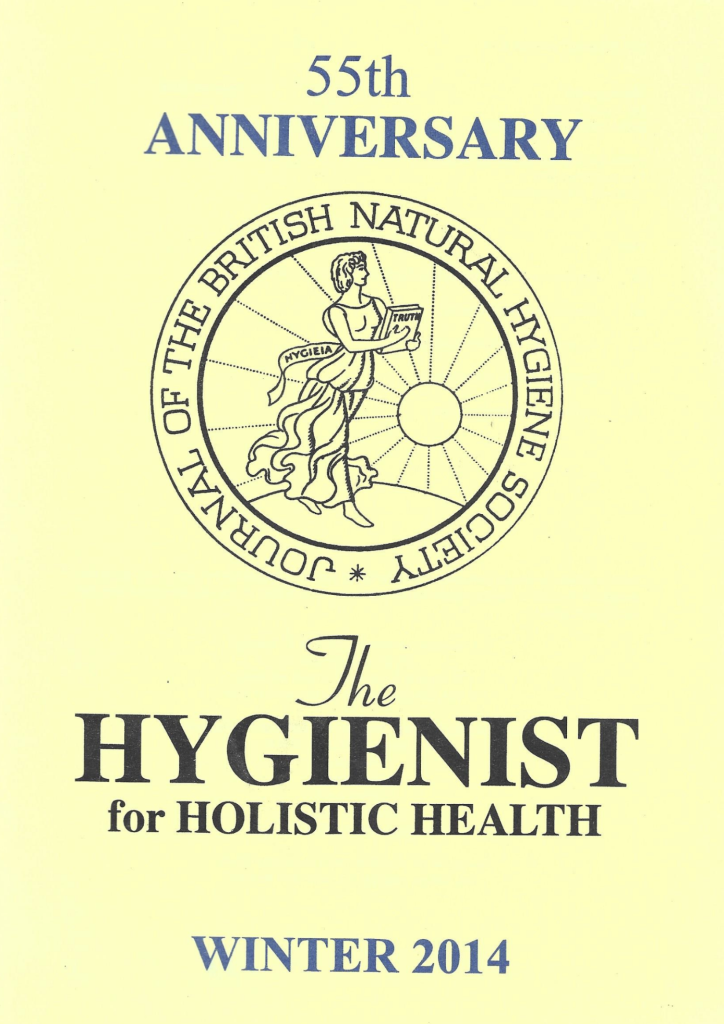
with Dr. Sidhwa serving as its editor.
Courtesy of Ruki Sidhwa
He routinely fasted throughout his life, sometimes lasting as long as 25 days. This, he believed, was the reason for his incredible health. He would complete his fasts at one of his colleagues’ health centers in the United States, and he firmly believed that fasting should always be done under supervision, especially for more than a day or two.
While Dr. Sidhwa was not as prolific a writer as Dr. Shelton, he was nevertheless a significant author in his own right, having penned at least three books: Medical Drugs on Trial—Verdict Guilty, Fit for Anything, and most famously, The Quintessence of Natural Living for Health and Happiness, a collection of essays and talks on the art of the Natural Hygiene lifestyle, which he authored in 1994. Dr. Alec Burton shared their common bonds in a beautiful foreword to The Quintessence: “I have known Dr. Keki Sidhwa for almost 40 years. Our common interest in hygiene, our similar philosophical pursuit, and our iconoclastic view of many orthodox ideas combined to seal our friendship. Although we come from very different cultural backgrounds, our intrinsic view of life is similar.
Shalimar Health Home in Frinton-on-Sea, Essex, closed in 2004, when Dr. Sidhwa relocated to a smaller home. However, he continued to practice for several more years from his new residence. As the founder and director of Shalimar Health Home, he guided more than 25,000 individuals to better health through supervised fasting and a Hygienic lifestyle.
Dr. Sidhwa was a role model of ethics and morality and personified physical fitness. He was a gifted poet with a wonderful sense of humor that infused all his speeches and writings. In many ways, Dr. Keki R. Sidhwa epitomized everything that a Natural Hygienist should be. He was a classical scholar and a superb teacher. He was modest; his lectures and writings sparkled with elfin humor. There is an aura of spiritual awareness that radiates from his being. On the other hand, he was an outstanding long-distance runner.
On October 16, 2018, the Natural Hygiene Movement and the NHA, which Dr. Keki Sidhwa had helped shape and lead for many decades, lost one of its final pioneering voices with his passing at the age of 92. Dr. Sidhwa, the legendary figure from England, was instrumental in advancing the principles of Natural Hygiene, leaving behind a lasting legacy in the field. He was the beloved son of the late Mani and Rathanshah Sidhwa, originally from Marine Lines, Mumbai, India, and loving father of Yasmin, Zarina, Rookshana, and Gillian David.

in the time-honored traditions of the SIDHWA family’s Natural Hygiene Lifestyle, first introduced and written about by Dr. Keki R. Sidhwa, N.D.D.O.
Photo: Courtesy of Ruki Sidhwa
Ruki Shares a Memory Growing Up with Her Dad
Ruki recalls … “from an early childhood, we shared our family home with thousands of outpatient and inpatient guests at our Shalimar Health Home. Our house was split between the family and clinic/guests’ sides. We spent much of our childhood helping in the kitchen, making and delivering juices, fresh water, and meals (mainly fruit and salads) to our guests. In the evening, my father regularly gave talks about healthy living. My parents were undoubtedly ahead of their time – yes, they and my sisters and I were mocked: – for our homemade bread sandwiches…no slices of ham or beef, and why we didn’t have school meals.
When there was a local carnival- one of my sisters (Yasmin) was the carnival princess… and my dad decided we would have a Health Float – full of fruit & veg – you can imagine us teenagers at the time were less than enthusiastic about being roped in – not least for the embarrassment – but here I am now continuing his legacy as a Naturopathic Health Coach.
Ruki Sidhwa, Naturopathic Health Coach – CNM Dip/mANP and daughter of Dr. Keki Sidhwa
Ruki founded Sidhwa Health, a wellness organization rooted in the time-honored traditions of the SIDHWA family’s Natural Hygiene Lifestyle, first introduced and written about by Dr. Keki R. Sidhwa, N.D.D.O. At its core, Sidhwa Health embodies the fundamental belief that by respecting and working in harmony with nature, individuals can take proactive control of their health, significantly reducing the risk of illness and disease. Learn more about Ruki Sidhwa, Naturopathic Health Coach, in the article Continuing a Family Legacy of Natural Hygiene in Health Science Spring 2025

From A Tribute to Keki Sidhwa, N.D., D.O. Fall 2018
From Health Science – Fall 2018
Frank Sabatino, D.C., Ph.D. (Deerfield Beach, FL) Shares…
I knew Dr. Sidhwa for over 40 years, from when I started a Natural Hygiene club during my student days in Chiropractic college. He was always one of the most compassionate and supportive people in our movement, and he had a huge impact on my work and understanding of Natural Hygiene. Though small in stature, he was a giant, iconic figure who worked tirelessly to spread the word of Natural Hygiene internationally and to promote the profound health benefits of water-only fasting. As a staunch, principled hygienist and accomplished physician, he was not only a personal mentor of mine but, it is safe to say, a mentor to all the followers and practitioners of Natural Hygiene and natural living. In fact, at a time when mediocrity passes for celebrity, and men of principle are few and far between, Dr. Sidhwa was one of the most honest, loving, and principled people I have ever met. He was unwavering in his pursuit of health and truth, as well as in his desire to help humanity. I cannot emphasize too strongly that I am eternally grateful for the opportunity to stand on the shoulders of Dr. Sidhwa and other Hygienic pioneers, to begin and continue my own journey on the path of truth and honor that he paved with his own blood, sweat, and tears. Thank you Keki, you will be missed.

Ralph Cinque, D.C. (Buda, Texas) Shares…
Dr. Keki Sidhwa was instantly warm and friendly to me when I first met him in 1976. I can remember it like it was yesterday. Keki had a very Hygienic disposition, meaning that he was at peace and harmony with himself, his organism, and also with others. He understood the importance of equilibrium, and he always maintained his own. I know he overcame a rather sickly childhood, and it was his nature to be very asthenic throughout his life. He was slight, but it was deceiving because he was very physically fit and athletic, and when he chose to fast, he endured it magnificently. I know how much he valued the other Hygienic doctors as colleagues and friends. and although I never observed him in a clinical setting, I have heard from people who went to see him, and all of them spoke highly of him, with the greatest respect. Honestly, I don’t know anyone who was more liked than Keki Sidhwa. It is sad and daunting that he is gone, for he was the last of his generation of Hygienic doctors. It was truly an honor to know him. I am very glad and grateful that our lives intersected. He was not only a great spokesman for the Hygienic way of life, he also exemplified it. and when you consider the arc that his life took, it was some life, indeed. You lived it well, Keki.

We met him at the 1988 and 1989 ANHS conferences, and he was so generous in sharing his time and profound wisdom with us at those events.
Photo Courtesy of Healthline.com.Au
Greg Fitzgerald, D.O., D.C., N.D. (Sydney, Australia) Shares…
Dawn and I were very saddened to hear of Keki’s passing. We met him at the 1988 and 1989 ANHS conferences, and he was so generous in sharing his time and profound wisdom with us at those events. We subsequently subscribed to his regular publication, The Hygienist: The Journal of the British Natural Hygiene Society. We also bought and read his two books. He was a great advocate of Natural Hygiene and a passionate teacher of its timeless principles. We treasure each one of his newsletters and books, just as we do those of Dr. Shelton and the other great teachers of health and truth. He was truly inspirational. Vale, sweet Keki!
Joel Fuhrman, M.D. (Flemington, NJ) Shares…
I’m sure everyone remembers Keki fondly. One thing I remember about Keki—it was not all about food and veganism. Early on, he recognized that we were overtaxing Earth’s resources and polluting our world, harming future generations to come. He recognized the need to protect our soil, forests, and climate, and that a revolution in living was required, not just the adoption of veganism. He was the first to admit he may have made a few mistakes in his life, but he was always open to learning, listening, and thinking about what he might not know, in spite of his interest in and vast knowledge of many different subjects.

Photo Courtesy of Health Science: Jul/Aug 1988
James Michael Lennon (NHA Executive Director1986–2000,Tampa, FL) Shares…
Dr. Keki Sidhwa was a tremendously important leader in the worldwide effort to promote the message of “Health through Healthful living.” He inspired countless thousands of people through his work as a doctor, lecturer, and author. He taught—and lived—in a way that motivated everyone who knew him to reach for a full and meaningful life that was beyond simple, physical well-being.
Victoria Moran (New York, NY) Shares…
My primary memory of Dr. Sidhwa was at the International Vegetarian Union Congress in Maine in 1975. I was so swept up in the event and so on fire about being vegan; just the week before, I’d been eating dairy. This week I was vegan, though, so when Dr. Sidhwa asked, I enthusiastically responded in the affirmative. He said, “That’s funny. You don’t look vegan.” I thought he was psychic. He knew so much about faces and bodies and how food affects them that even though I sincerely believed myself to be vegan at that moment, he knew precisely what I’d been eating. To his credit, he didn’t hold it over me or call me a hypocrite. He just spoke the truth in his unassuming way, and his brilliance was obvious.

Photo courtesy of Mark Huberman
Ron Cridland, M.D. (Kelowna, BC, Canada) Shares…
The loss of David Scott, Alec Burton, and now Keki in my mind marks the end of an era. These three, along with Virginia Vetrano, were the doctors whom I listened to as a teenager when I first became aware of Natural Hygiene and attended my first conferences.
Stephan Esser, M.D. (Ponte Vedra Beach, FL) Shares…
A beautiful spirit, a rare poet, a man of the people, passionate to share the message of healing, hope, and peace with the world. May his spirit live on in each of us.
Nejla Burton, D.O., D.C., MSc. (Sydney, Australia) Shares…
Dr. Keki Sidhwa was at once affable yet forcefully unequivocal, taking an opposite view of “therapeutics” with the maxim: “Healthcare is self-care,” a firm position of a crusader. His philosophy and teachings will live on. I am sad to hear of his passing, and send my condolences to his family.
Jerry Deutsch (NHA Past-President 2006 – 2012, Philadelphia, PA) Shares…
Keki was a physician and a poet, a rare combination of scientist and creative artist. One event in the late 80s that I fondly remember was a Cornell University alumni lecture we were to attend that was to be presented by an eminent cardiologist. Unfortunately, the cardiologist had a heart attack on the way to the lecture, so I volunteered Keki to use the missing doctor’s slides and give a lecture on how to prevent heart attacks. He gave a great impromptu talk and loved doing it! He always appreciated coming to the aNHS and later the NHa conferences, where he generously gave of his time and knowledge.

grandson of founder Dr. William Esser
Photo courtesy of Dr. Stephan Esser
Jean and Brad Oswald (Pewaukee, WI) Share…
Jean met Dr. Sidhwa in 1977 and later worked with him on three books promoting the principles of Natural Hygiene. Twenty years later, Brad contacted Keki after reading Fit for Life. Dr. Sidhwa was instrumental in introducing us at the Doubletree Hotel Hygiene Conference in Fort Lauderdale. We both visited his amazing Shalimar Health Retreat, where he tirelessly helped people from all over the world. The Hygienist, his publication, which he single-handedly produced for over 55 years, greatly inspired us. We last saw Dr. Sidhwa at his residence in Beckenham, UK, in 2017. He had his usual good humor and inquisitiveness. He was truly the kindest and most caring soul who dedicated his entire life to Natural Hygiene. Dr. Sidhwa will be greatly missed.’
Mamiko Matsuda, Ph.D. (Houston, TX) Shares …
I am very saddened to hear about the death of Keki. What a great man we have lost! Ever since I first met him at the 46th NHA Conference in 1994, he has been my wonderful Natural Hygiene mentor. I was new to Natural Hygiene at that time, but he taught me how to incorporate it into my daily life without resistance. I learned a lot from him, and I have enjoyed our annual reunions at the NHA conferences every year. He was my Natural Hygiene hero. He will remain in my heart until the last day of my life. Thank you, Keki, and God Bless you!

Photo: Health Science Fall 2018
What is Natural Hygiene?
From Health Science – April 1978
Dr. Keki R. Sidhwa believes that Natural Hygiene encompasses a philosophy and way of living that emphasizes health through holistic, healthful living rather than relying on external medical interventions like pills or surgery. Natural Hygiene stresses the individual’s ability to maintain and restore their health through lifestyle choices, which can either promote or hinder the body’s natural healing process. Dr. Sidhwa contrasts this with the conventional medical approach, which often focuses on symptom management rather than the root causes of health issues.
He also explains that while certain aspects of health, like diet, exercise, and fresh air, are essential, Natural Hygiene is a comprehensive, integrative approach that combines all these elements. He criticizes the fragmented focus of many health fads, pointing out that lasting health comes from synthesizing multiple well-being factors.
Dr. Sidhwa believed there was an interplay between heredity and environment, stating that while genetics play a role in health, how individuals live (their environment) can significantly impact their well-being, sometimes overriding genetic factors. For instance, even individuals with strong genetic backgrounds, like Winston Churchill, did not necessarily live healthy lives. In contrast, others, like George Bernard Shaw, followed hygienic principles and maintained better health and longevity.
On cell health, Dr. Sidhwa explains that cells can rejuvenate and repair when their environment (both internal and external) is optimized. He uses the example of Dr. Alexis Carrel’s experiment with chicken heart cells, which demonstrated that cells could function indefinitely if kept in a healthy environment. In the same way, maintaining good health habits can allow our cells to regenerate and function optimally.
Fasting, Dr. Sidhwa shares, is not a “cure” but an opportunity for the body to rest and recuperate. Fasting allows the body to conserve energy otherwise spent on digestion, enabling the body to focus on healing and rejuvenating itself. He emphasizes that the body is inherently self-healing, and fasting provides the optimal conditions for this process.
Dr. Sidhwa acknowledges that surgery is sometimes necessary, particularly for repairing injuries or removing damaged tissues. However, he criticizes unnecessary or “destructive” surgeries, such as eliminating tonsils or gallbladders, which don’t address the root cause of the problem. He views such surgeries as insufficient and often harmful because they don’t teach patients how to prevent the issues from recurring.
Poor lifestyle choices—such as smoking or poor diet—are not only harmful to the individual but to society at large. He considers ill health a “social crime,” as it burdens the healthcare system and the productivity of the society that must care for those who neglect their health. He advocates for personal discipline in health for the sake of both individual well-being and the broader community.
In essence, Dr. Sidhwa knows that Natural Hygiene promotes a proactive, self-sustaining approach to health that focuses on prevention and self-care through harmonious living, emphasizing the quality of life rather than sheer longevity.

What Sets Natural Hygiene Apart From Other Health Systems?
Natural Hygiene doesn’t single out one specific thing responsible for your overall health. Natural Hygiene comprises all facets of healthful living, including physical activity and exercise, wholesome diet, pure air and water, adequate rest and sleep, mental and emotional poise, and creative activity. Natural Hygiene is the art and science of living in such a way that all aspects are provided for abundantly.

“A Disease of Our Own Making: Health, Ethics, and the Fall of Self-Care”
Dr. Keki R. Sidhwa asserts that sickness is a crime, particularly when it results from poor lifestyle choices rather than external accidents or unavoidable environmental factors. He draws on the philosophy of early health pioneers like Bernarr MacFadden, who believed that illness is a societal stigma and should be considered a moral failure. Sidhwa shares the idea from Samuel Butler’s Erewhon, where an ideal society fines people for becoming sick, a concept rooted in ancient Chinese philosophy, where doctors were paid only for keeping patients healthy.
Sidhwa argues that each person has two main “rights”—biological and environmental. Biological rights include access to fresh air, nutritious food, exercise, and emotional well-being, while environmental rights involve personal privacy and ethical conduct. He believes that biological rights should take precedence, and violating them through poor lifestyle choices harms not only the individual but society as a whole.
He highlights how personal health impacts others: when someone is sick, others must care for them, diminishing the productive potential of healthy individuals. Sidhwa calls this a “crime” because it takes away from society’s collective well-being. He suggests that indulging in unhealthy habits—such as overeating junk food, drinking alcohol, or engaging in harmful behaviors, can be viewed as stealing from society, as it burdens others with the responsibility of care.
Sidhwa emphasizes the importance of self-care, stating that sickness is often a self-inflicted condition and that each person is responsible for their own health. By following the principles of Natural Hygiene—living a wholesome, health-conscious life—individuals can reduce the burden on society and contribute to a healthier world. He concludes with a poem addressing the deterioration of human health and the environment, lamenting how humanity has abused the body and the gifts of life through negligence and poor choices.
Living Food Films
Jun 5, 2014
Dr. Keki Sidhwa discusses the profound connection between living food and holistic well-being in the interview. He emphasizes that consuming pure, living food improves physical health, enhances mental clarity, and fosters spiritual awareness. Living food, free from contamination and pollutants, supports a more conscious way of life, allowing individuals to connect with their bodies and deeper spiritual dimensions.
Dr. Sidhwa highlights the importance of “therapy,” meaning self-care for the body, mind, and soul. Unlike traditional medicine, hygienic doctors focus on guiding patients to heal themselves, respecting the body’s natural healing power. He distinguishes this approach from the external healing methods of mainstream medical practices. For Dr. Sidhwa, living food is integral to this philosophy, but he acknowledges that not everyone is immediately ready or able to adopt a raw food diet. In such cases, a transitional approach may be necessary.
He also stresses that spirituality is not automatic with a diet of living foods. It requires self-awareness and introspection, developed over time through conscious observation of one’s thoughts, feelings, and actions. Dr. Sidhwa compares this journey to a child’s first steps—it’s normal to falter, but with time and persistence, confidence grows.
A key point in the interview is that “healthcare is self-care.” Dr. Sidhwa encourages individuals to take responsibility for their own health, guided by professionals but ultimately empowered to make their own choices. He emphasizes the role of fasting in personal growth and spiritual development, noting it allows individuals to listen to their bodies and foster self-awareness.

“The Real Destiny of Natural Hygiene” – The purpose and significance of Natural Hygiene — that it is our mission to reform the world.
From Health Science – Nov/Dec 1983
In this reflection, Dr. Keki R. Sidhwa explores the purpose and significance of Natural Hygiene, describing it as a movement that aims to reform individuals and society. He acknowledges that many people are initially enthusiastic about Natural Hygiene, adopting its principles with vigor. However, over time, some individuals drift away, convinced that Natural Hygiene has “failed” them. They may fall into denial, rationalize their behavior, and eventually become even more opposed to it than they were initially supportive. This, Sidhwa argues, results from a deeper psychological issue—fear—and a lack of genuine self-understanding.
Sidhwa emphasizes that fear is a significant force that distorts our intelligence and leads to superficial reactions. It is fear, particularly in the form of expectancy, that prevents individuals from fully engaging with the principles of Natural Hygiene. According to Sidhwa, many people approach Natural Hygiene not as a holistic life philosophy but as a temporary solution for symptomatic relief, much like other therapeutic systems. He contends that this understanding is flawed, as the essence of Natural Hygiene is a living, dynamic process that cannot be confined to static concepts.
Sidhwa explains that the true nature of natural hygiene is not easily captured by words or defined by rigid doctrines. It is not a “cult” or a “guru-based” system; rather, it is a philosophy that rejects blind faith in favor of personal responsibility and self-awareness. Natural Hygiene challenges individuals to confront their inner psychological barriers, break free from habitual responses, and embrace a deeper understanding of themselves. This journey of self-discovery is not about external authority but internal growth and learning.
At institutions like Shalimar, Natural Hygiene differs significantly from the conventional “health farms” that rely on external motivation like competition or rewards. Instead, Natural Hygiene encourages genuine self-reflection and sensitivity to oneself and others. Sidhwa stresses that education in this context is not about imposing rules but about fostering an environment where individuals can learn to live more harmoniously internally and externally. He advocates for education that encourages self-knowledge, emotional clarity, and a supportive lifestyle, essential for true healing and personal transformation.
Sidhwa also critiques the popular notion that Natural Hygiene is a simplistic, fixed path to health. Instead, it is a living process that is constantly evolving and cannot be fully understood in one moment or through rigid concepts. For this reason, the Natural Hygiene movement is not about creating a perfect or utopian world but about encouraging individual growth and responsibility. It challenges participants to shift their attention inward, examining their actions and their role in their health and happiness.

Furthermore, Sidhwa argues that the ultimate goal of the Natural Hygiene movement is not simply personal well-being but societal reform. The movement, he suggests, is a “caring revolution,” aiming to restore a natural and balanced way of living that respects all forms of life on Earth. It represents a shift toward a more compassionate, holistic worldview that nurtures both individual health and collective well-being.
In conclusion, Sidhwa underscores that Natural Hygiene is not about easy solutions or grand promises. It is a confrontational, sometimes uncomfortable process of self-exploration and growth. It is about meeting life as it is—without illusions, expectations, and external authority—by taking responsibility for one’s own health, happiness, and relationship with the world. He concludes with a reminder that we, as individuals, are most responsible for our health and well-being, and the key to transformation lies within ourselves.
The NHA wishes to remind the readers that nothing in this or other publications is intended to constitute medical treatment or advice. Readers should be aware that some previous publications do not reflect the NHA’s current health teachings or approach to health in several areas.
Our Mission
The mission of the National Health Association is to educate and empower individuals to understand that health results from healthy living. We recognize the integration of all aspects of health: personal, environmental, and social.
We communicate the benefits of a plant-based diet, exercise and rest, a healthy environment, psychological well-being, and when indicated, the use of fasting.

 SUBSCRIBE TODAY AND NEVER MISS AN UPDATE